
REVIEW · OMAN DESERT SAFARIS
Sunset desert safari tour in Salalah(private tour)
The desert comes after a surprising green beginning. This private Salalah tour links two sides of southern Oman that are easy to miss on a standard sightseeing day: the ancient frankincense country around Wadi Dawkah and the vast dunes of the Rub al Khali. I especially like the frankincense stop and the chance to share local Karak tea in Thumrait. The main drawback is the long amount of time spent driving between sites, though that travel is part of reaching Ubar and the Empty Quarter.
The tour also works well for visitors who want a private vehicle and a guide who can explain the area rather than simply point at it. Mohammed and Mohamed receive particular praise for careful driving and warm service, while Ibrahim is praised for explaining the desert and even stopping to show the stars. At $125 per person, the value depends on your group size and interest in history, local culture, and wide-open desert views.
In This Review
- Key points at a glance
- Why this Salalah tour covers more than sand
- Wadi Dawkah and the trees behind Oman’s perfume trade
- Thumrait, Karak tea, and the search for black camels
- Ubar at Al Shisr and the old frankincense road
- The black camels and the changing view inland
- Entering the Rub al Khali before sunset
- How the timing and price affect the value
- Who will enjoy this private desert day
- Should you book the Salalah sunset safari?
- FAQ
- Where does the tour take place?
- What time does the tour start?
- How long does the experience last?
- Is this a private tour?
- What languages are available?
- Is pickup available?
- What is the cancellation policy?
Key points at a glance
- Wadi Dawkah’s ancient frankincense trees: See the gnarled trees that helped make Oman famous along the old frankincense trade routes.
- Karak tea in Thumrait: A simple local pause adds a human touch between the natural and archaeological stops.
- Ubar at Al Shisr: Walk around an important former stopping point for frankincense caravans, about 170 kilometers north of Salalah.
- Black camels near Thumrait: Keep an eye out for these distinctive animals during the stop.
- Sunset in the Rub al Khali: Finish among some of Oman’s tallest dunes, with about two and a half hours set aside in the Empty Quarter.
- Private guiding in English or Italian: Your group travels alone, with pickup offered and a 1 p.m. start.
Why this Salalah tour covers more than sand
Many desert trips rush straight toward the dunes. This one takes a broader view of southern Oman. It begins with frankincense trees, moves through a town known for local tea and black camels, reaches the archaeological site of Ubar, and only then heads into the Empty Quarter for sunset.
That order matters. By the time you reach the sand, you have some context for why this part of Oman mattered long before modern roads. Frankincense was once a major trade product, and the route through southern Oman connected inland settlements with wider caravan networks.
I like that the day is not built around one photo stop. You get plants, people, archaeology, animals, and sand. The trade-off is obvious: this is an eight-hour outing, and the remaining time beyond the listed stops is used for driving. If you want a short afternoon in the dunes, this is more than you need. If you want one full day that explains the area, the long road makes sense.
The experience begins at 1 p.m. That gives you a morning for other plans in Salalah and places the final desert portion near sunset. Since the tour depends on good weather, poor conditions can lead to a different date or a full refund.
More desert safaris in Salalah:
- East Salalah Mountain Safari, Wadi Darbat, Beach, Camels, Dunes
★ 5.0 · 206 reviews - Salalah: Wadi Darbat, Jabal Samhan, Baobab, Mirbat Sand Dune
★ 4.6 · 178 reviews - Sunset Desert Safari Salalah Tour in Rub Al Khali – Empty Quarter
★ 5.0 · 91 reviews
Wadi Dawkah and the trees behind Oman’s perfume trade
The first stop lasts about 90 minutes at Wadi Dawkah. This valley is part of the UNESCO-listed frankincense region, and its main attraction is not a grand building. It is the frankincense tree itself.
You will see trees with twisted limbs and unusual shapes. Some are believed to be centuries old. Against the dry valley and mountain setting, they look almost sculpted by hand. The trees may seem modest at first, but a guide can help you understand their importance. Frankincense was not simply a pleasant scent. It helped shape trade, settlement, and Oman’s place in the ancient world.
This is one of the best parts of the day for visitors who prefer living cultural links to a quick museum display. The tree still grows here, and the stop gives you a clear sense of the plant’s natural setting. I would give the guide your attention here, since the historical value is the reason this stop earns so much time.
The site also provides an important change of pace. You start among trees and open ground rather than sand dunes. Salalah is often associated with its seasonal greenery, but the interior around Wadi Dawkah shows another side of the region. You can expect stark mountain scenery, dry earth, and hardy trees rather than a lush garden.
Thumrait, Karak tea, and the search for black camels
The trip then continues to Thumrait, with about an hour allocated to the area. The stop includes local Omani tea, known as Karak. This is a small detail, but it gives the outing a more personal rhythm. You are not only moving from attraction to attraction. You have time to pause and taste something associated with everyday local life.
Thumrait is also the place to look for black camels. These are not the pale camels most people picture when they think of Oman. Their dark coloring makes them a memorable sight, though the information provided does not promise a guaranteed close encounter or a particular number of animals. Think of this as a chance to spot them during the visit, not a formal animal presentation.
I appreciate this stop because it breaks up the long drive to the archaeological site. A cup of Karak and a look around the area can make the journey feel less like transport and more like part of the day. Still, the stop is less structured than Wadi Dawkah or Ubar, so your enjoyment will depend on how much you like informal local moments.
The guide’s role matters here. Mohammed and Mohamed are praised for their courtesy and care, and their ability to explain local life adds value to a stop that could otherwise feel brief. Mohamed also speaks Italian very well, making him a useful choice for Italian-speaking visitors. The tour is offered in English or Italian.
Ubar at Al Shisr and the old frankincense road

The third stop is the Wubar archaeological site, also called Ubar, at Al Shisr. It is about 170 kilometers north of Salalah and receives roughly 90 minutes of your time.
Ubar was once a stopping point for frankincense caravans. Its importance comes from its position and its connection to the old trade routes. After seeing the trees at Wadi Dawkah, you now reach a place linked to the movement of frankincense across the region. That sequence gives the history a useful beginning, middle, and end.
The remains are not a polished city center. You should expect an archaeological site where the setting is part of the experience. The appeal lies in imagining caravans stopping here, loading supplies, and continuing across difficult country. A guide who explains what you are seeing can make a major difference, especially if you do not already know the story of Ubar.
This is also the point where the day’s long driving becomes easier to understand. Ubar is far from Salalah, and reaching it takes time. The tour is not designed for quick access. You are paying for a private day that reaches places well beyond the city, not for a series of nearby attractions.
The site is a good match for anyone interested in archaeology, trade routes, and Oman’s place in the ancient world. If your priority is only the sunset, you may find the Ubar visit too much. I would book this tour for the full story, not just the final dune stop.
More things to do in Salalah:
- Mountain Safari Private Tour
★ 5.0 · 105 reviews - Salalah: Sunset Desert Safari – Rub Al Khali – Empty Quarter
★ 4.6 · 79 reviews - West Salalah Tour – Caribbean of Orient – Fazayah Beach with City
★ 5.0 · 74 reviews - West Salalah: Caribbean of the Orient Fazayah Beaches & City
★ 4.5 · 60 reviews
The black camels and the changing view inland
The route gives you a steady change in scenery. You move away from Salalah and its coastal setting toward drier country, farms, mountains, open plains, and eventually sand dunes. One review describes the day as a shift from lush surroundings to wind-shaped barren dunes, which is a useful way to picture the overall journey.
The black camels fit naturally into this middle section. They are a reminder that the interior is not empty in the way a first glance might suggest. People, animals, trade, and travel have long been part of this country, even in places that now look quiet and remote.
You will spend much of the day in the vehicle, so a private tour has a practical advantage. You are not adjusting to a large shared group or waiting for multiple parties at every stop. You can focus on the guide’s explanations and the views outside the window. The available information does not specify the vehicle type, refreshments beyond Karak, or exact pickup locations, so confirm those details when booking.
Careful driving is another strong point. Mohammed is praised as an excellent driver on both the highway and the dunes. That matters here because the route combines a long road journey with desert driving. A competent driver can make the day feel relaxed instead of tense.
Entering the Rub al Khali before sunset
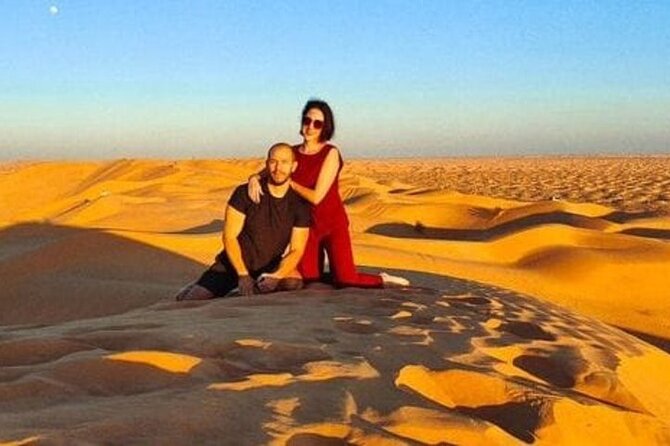
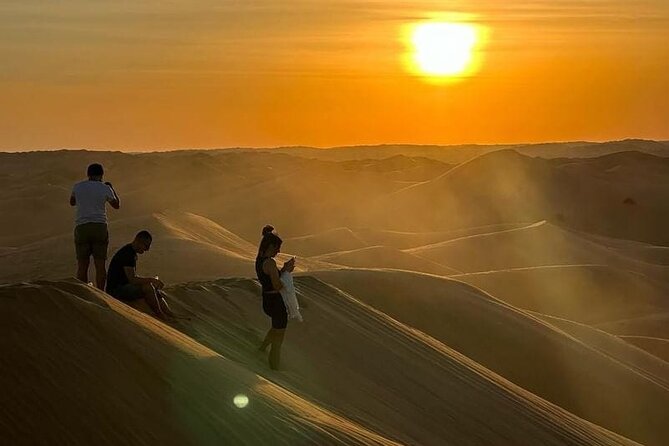
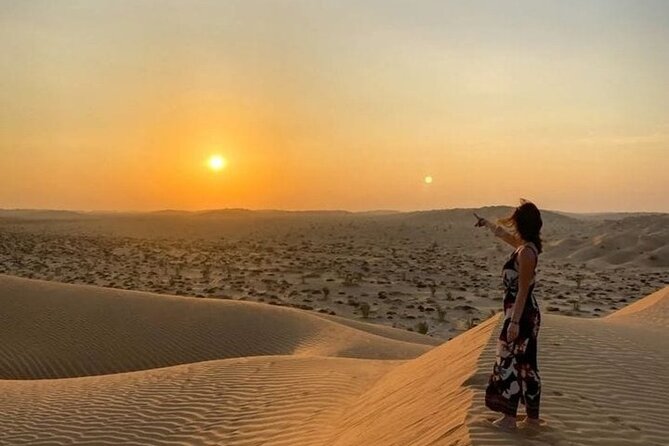
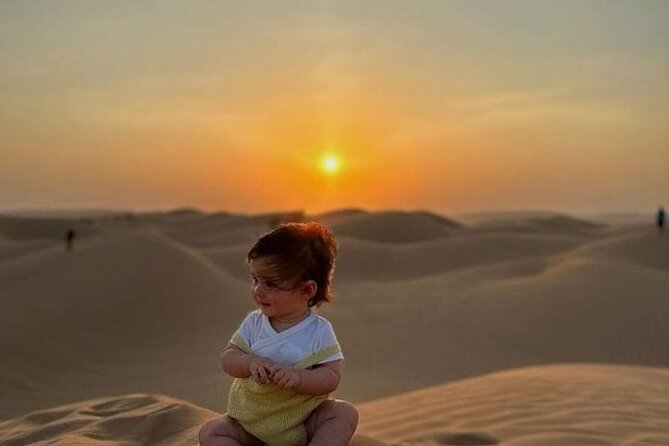
The final stop is the Empty Quarter, or Rub al Khali, with about two and a half hours there. This is the largest sand desert in the world and one of southern Oman’s best places for sunset. The dunes here can reach about 250 meters, giving the final part of the tour real scale.
The first impression is space. The sand rises and falls in long curves, and the horizon seems to pull away from you. Wind shapes the surface into lines and ridges, while the height of the dunes changes your view every few steps. The desert is not a theme park attraction. Its appeal is the silence, the size, and the feeling of being far from city life.
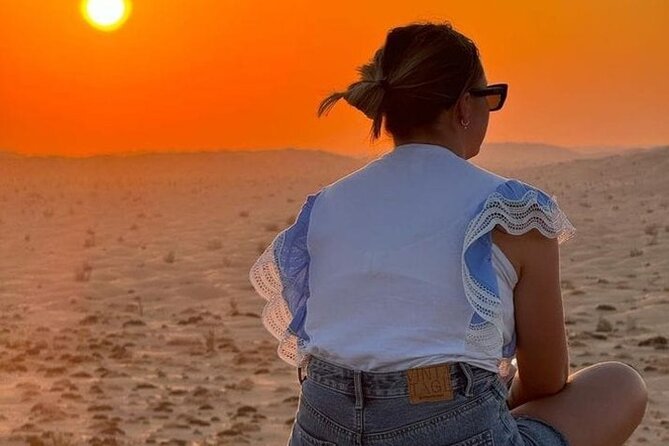
You have enough time for the sunset rather than arriving just in time for a quick photograph. The guide can take you to good points among the dunes, and you should have time for pictures and quiet observation. One account praises the chance to enjoy the silence and take memorable photos without being hurried.
Sunset is the main event, but do not treat the desert as finished once the sun disappears. Ibrahim is praised for stopping so his group could see the stars. That kind of extra pause is one reason a private trip can feel more personal. It is not listed as a guaranteed part of every departure, so consider it a pleasant possibility rather than a promise.
The tour description also refers to learning about Bedouin life. That adds useful context to the Empty Quarter. The dunes are beautiful, but the desert has also been a place of movement, work, and survival. A good explanation keeps the visit grounded in real life rather than turning it into a simple backdrop for photographs.
How the timing and price affect the value
The tour costs $125 per person and lasts about eight hours. For a private outing reaching Wadi Dawkah, Ubar, and the Rub al Khali in one day, I consider that a reasonable price for people who value a dedicated vehicle and guide. You are covering substantial distances and visiting sites far outside Salalah.
The value is strongest for couples, families, or small groups who want privacy and a flexible feel. A private tour also means the guide’s attention is directed toward your group alone. The exact saving compared with a shared tour cannot be judged from the available information, but the private format is a meaningful part of what you are paying for.
The value is weaker if you dislike long drives or have limited time in Salalah. The tour includes about five and a half hours at the four main stops, but the remaining hours are travel time. That is not a flaw hidden in the schedule. It is the price of going far inland.
Starting at 1 p.m. works well for sunset, but it also means the day stretches into the evening. Plan your other activities around that. Confirmation arrives at booking, and pickup is offered. The tour has an average booking lead time of 14 days, so arranging it early is sensible during a busy visit.
Free cancellation is available up to 24 hours before the start time for a full refund. Changes or cancellations inside that window are not accepted for a refund. Since good weather is required, a weather cancellation results in either another date or a full refund.
Who will enjoy this private desert day
I would recommend this tour to you if you want several layers of southern Oman in one outing. It suits people who enjoy history, natural scenery, local customs, archaeology, and photography. You will get the most from it if you are happy to spend much of the day on the road for access to remote places.
It is also a strong choice for Italian-speaking visitors because the tour can be conducted in Italian, and Mohamed is praised for speaking the language very well. English-speaking visitors have the same option in English.
Families and most people able to participate in a full-day road excursion should find the format manageable, and service animals are allowed. The tour is near public transportation, though pickup is offered, so you should not need to organize the whole day around reaching a meeting point.
I would hesitate to recommend it if your ideal Salalah outing is short, highly active, or focused only on sand driving. There is no promise of a particular number of dune runs, and the emphasis is broader: culture, history, scenery, and sunset. The road time is central to the experience.
Should you book the Salalah sunset safari?
Book it if you want the Empty Quarter as the final chapter of a fuller Omani story. Wadi Dawkah gives you the frankincense trees, Thumrait adds Karak and the possibility of black camels, Ubar brings the old caravan routes to life, and the Rub al Khali supplies the dramatic finish.
I would choose this private tour over a dune-only trip if you value explanation and variety. The highest praise goes to the guides’ courtesy, driving, language skills, and willingness to add thoughtful moments such as a stop for stargazing. Just remember that the desert sunset comes after a long day of travel. For the right kind of visitor, that journey is not wasted time. It is how you reach the quieter, more meaningful parts of Salalah’s interior.
FAQ
Where does the tour take place?
The tour begins in Salalah and visits Wadi Dawkah, Thumrait, the Wubar archaeological site at Al Shisr, and the Rub al Khali desert.
What time does the tour start?
The stated start time is 1 p.m.
How long does the experience last?
The tour lasts approximately eight hours. The listed stop times account for about five and a half hours, with the remaining time used for travel.
Is this a private tour?
Yes. Only your group participates in the private activity.
What languages are available?
The tour is offered in English or Italian.
Is pickup available?
Yes, pickup is offered. The experience is also near public transportation.
What is the cancellation policy?
You can cancel at least 24 hours before the start time for a full refund. Cancellations or changes made less than 24 hours before the start time are not refunded or accepted. If poor weather cancels the tour, you can choose another date or receive a full refund.
Just added in Salalah
- West of Salalah private tour – fascinating mountains and beaches★ 5.0 · 9 reviews
- Salalah White Beaches & Panoramic Views of sea (Full Day Tour)★ 5.0 · 1 review
- Where Sea Meets Rock: A Scenic Journey to West Salalah’s Shores★ 5.0 · 5 reviews
- West Salalah Tour by VisitSalalah★ 5.0 · 6 reviews
- West Salalah Beaches and Blowholes★ 5.0 · 7 reviews
- Explore Samhan Mountain – Half-Day Getaway with Lunch Included.★ 5.0 · 10 reviews
- Private tour – Empty Quarter desert adventure – Wadi Dawka + Ubar★ 5.0 · 5 reviews
- Salalah East & West Combination★ 5.0 · 2 reviews
Oman Desert Safaris, compared.
Wahiba Desert and Wadi Bani Khalid Guided Group Tour
Read our review →


Full-Day Private Wahiba Sands Desert and Wadi Bani Khalid Tour
Read our review →
East Salalah Mountain Safari, Wadi Darbat, Beach, Camels, Dunes
Read our review →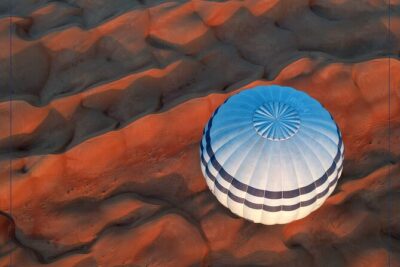
Wadi Darbat, Jabal Samhan, Baobab, Mirbat Sand Dune
Read our review →Browse the lists this tour appears in