
REVIEW · OMAN DESERT SAFARIS
Sunset desert safari Salalah with Dinner in a Bedouins camp
The desert changes character by the hour. This private Salalah tour moves from ancient frankincense trees at Wadi Dawkah to Thumrait, the lost city of Ubar, and the huge dunes of the Empty Quarter before dinner at a Bedouin camp. I like the strong variety packed into one afternoon, and I like that the tour includes local tea, coffee, and snacks rather than treating the desert as scenery only. The main consideration is the long schedule: with four stops listed at about two hours each, you should expect plenty of time on the road and a late finish.
I also like the private format. Your group travels alone, with an English- and Italian-speaking guide, so you can ask questions without keeping pace with a large bus. Guide Mohammed earned particular praise for explaining the places along the way. The $150 price is not a budget outing, and the 3 OMR admission fee for Ubar is extra, but the full-day route covers a great deal of Dhofar in one well-organized trip.
In This Review
- Four Details That Shape the Day
- Why This Route Works So Well
- Wadi Dawkah and the Frankincense Country
- Thumrait, the Practical Town on the Way North
- Ubar, the Lost City of the Sands
- The Empty Quarter at Sunset
- Dinner at a Bedouin Camp
- What the $150 Price Buys You
- Who Should Book This Salalah Tour?
- Should You Book It?
- FAQ
- Where does the tour take place?
- What time does the tour start?
- How long does the tour last?
- Is pickup available?
- Is the tour private?
- What languages does the guide speak?
- Is dinner included?
- Are tea, coffee, and snacks included?
- Is admission to Ubar included?
- Can I cancel for a full refund?
Four Details That Shape the Day
- Wadi Dawkah’s frankincense trees: Walk among thousands of trees in a UNESCO-listed natural park and learn how their fragrant resin is collected.
- A route into northern Dhofar: Thumrait and Ubar take you well beyond Salalah’s coastal sights.
- Sunset in the Empty Quarter: The final desert stop brings vast dunes and changing light, the tour’s big visual payoff.
- Bedouin-style evening: Dinner at camp follows the desert drive, with Omani tea, coffee, and snacks included.
- Private guiding: Only your group participates, with an English- and Italian-speaking guide.
- Simple cancellation terms: You can receive a full refund if you cancel at least 24 hours before the 1:00 pm start.
Why This Route Works So Well
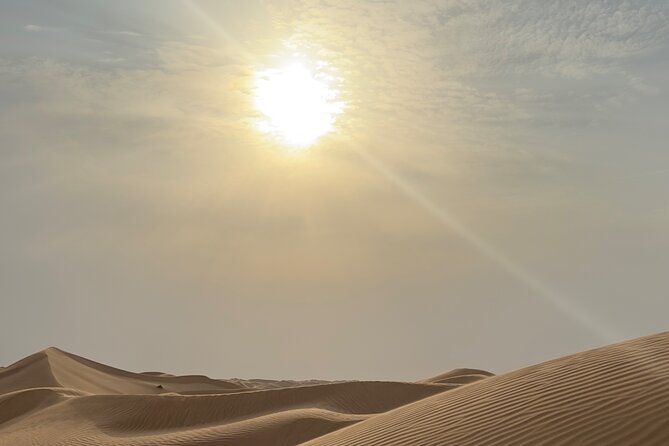
Salalah is often associated with the khareef season, green hills, coconut palms, and misty coastal views. This trip shows you another side of Dhofar. Head north and the scenery becomes stony, dry, and open. Keep going and the sand takes over.
That change gives the tour its shape. You are not simply driving to a dune, taking a few photographs, and returning. The route connects the region’s natural resources, old trade routes, settlements, archaeology, and desert life. Frankincense explains much of Dhofar’s past, while Ubar links that trade to one of the area’s most intriguing archaeological sites.
The afternoon departure is practical. A 1:00 pm start leaves time for the earlier stops before the heat softens and the sun drops toward the dunes. The stated duration is about eight hours, so your return should be around the evening, though the exact finish can depend on driving time and how long your group spends at each stop.
Because this is a private activity, you get more control than you would on a fixed large-group outing. You can ask Mohammed or another guide to explain a detail at greater length, and the pace should feel more personal. Still, a private vehicle does not make the route short. Salalah to the Empty Quarter is a serious outing, so bring patience along with your camera.
More desert safaris in Salalah:
- East Salalah Mountain Safari, Wadi Darbat, Beach, Camels, Dunes
★ 5.0 · 206 reviews - Salalah: Wadi Darbat, Jabal Samhan, Baobab, Mirbat Sand Dune
★ 4.6 · 178 reviews - Sunset Desert Safari Salalah Tour in Rub Al Khali – Empty Quarter
★ 5.0 · 91 reviews
Wadi Dawkah and the Frankincense Country
The first stop is Wadi Dawkah, about 40 kilometers north of Salalah. The word wadi can suggest a dramatic canyon, but here you should expect a stony, semi-desert valley with broad groves of frankincense trees.
The trees are the real reason to stop. Thousands grow across this protected area, and their small, gnarled forms make a sharp contrast with the smooth dunes later in the day. Frankincense resin has been prized for its scent for centuries, and Dhofar was a major source for the trade that linked southern Arabia with distant civilizations.
I find this stop valuable because it gives meaning to the rest of the route. Without it, frankincense can seem like a souvenir sold in a shop. At Wadi Dawkah, you see the trees that produce it and learn about traditional harvesting methods. The visit is less about a single monument and more about understanding an important local plant in its natural setting.
Two hours is generous for a quiet grove. That can be a benefit if you want time to look closely, walk around, and listen to your guide. It may feel slow if you prefer a rapid sightseeing schedule. Wear shoes suited to stony ground, and do not expect shade or a cool garden atmosphere. This is a dry outdoor stop in an exposed setting.
Admission is listed as free. Local tea, coffee, and snacks are included during the tour, though the exact timing of those refreshments is not specified. They are a welcome addition on a long day, particularly when you are moving between remote sites.
Thumrait, the Practical Town on the Way North

Thumrait lies about 100 kilometers north of Salalah and serves as an important town in Dhofar. It is known for livestock trading, agriculture, and commercial activity, with a souk selling produce, handicrafts, textiles, and other local goods.
This is not the polished, postcard-style stop on the tour. That is precisely its use. Thumrait gives you a look at a working town rather than another scenic viewpoint. It helps show how people live and trade in the interior of the region.
The town is also connected with farming, including dates, mangoes, and pomegranates. Those crops may surprise you after leaving Salalah’s greener coastal zone and entering drier country. The contrast helps explain how water, soil, and local conditions shape settlement in Dhofar.
The schedule allows about two hours here, but the exact activities are not laid out in detail. I would ask your guide what the stop will include on your date. The description refers to the town, its souk, and its commercial role, but it does not promise a particular market visit or a specific shopping session.
That uncertainty is worth noting. If you want a tightly scripted sightseeing program, this part may feel less defined than Wadi Dawkah or Ubar. If you enjoy seeing ordinary places and asking questions, Thumrait adds useful local context. You may find it especially worthwhile if your only knowledge of Oman comes from forts, beaches, and desert photographs.
Ubar, the Lost City of the Sands
The route then reaches Wubar, also called Ubar or the Atlantis of the Sands. The site is tied to the old frankincense trade and is described as a former trading center with ruins, fortifications, and underground irrigation channels.
The name creates big expectations, so keep them measured. You are visiting an archaeological site, not a fully rebuilt city. The appeal lies in the remains and in the questions around them. Ubar is believed to have flourished for centuries before being abandoned, but the exact cause remains uncertain. Natural disaster and social upheaval are among the suggested explanations.
That uncertainty makes the site more interesting, not less. You can look at the remains while your guide explains how the location fitted into the ancient trade network. The connection with Wadi Dawkah is important: first you see the trees that supplied the valuable resin, then you visit a place associated with moving that product through the region.
Admission to Ubar is not included. The stated charge is 3 OMR per person, so keep that amount separate from the $150 tour price. The site has about two hours allocated, which should allow time for the ruins and explanations, though the practical visit may vary.
Ubar is the least predictable stop for visitors who want a grand monument. The remains may not look dramatic in every photograph, and the experience depends heavily on the guide’s explanation. That is where a guide such as Mohammed can add real value. A good account of the trade route, the site’s possible decline, and the irrigation system turns scattered ruins into a place you can understand.
More things to do in Salalah:
- Mountain Safari Private Tour
★ 5.0 · 105 reviews - Salalah: Sunset Desert Safari – Rub Al Khali – Empty Quarter
★ 4.6 · 79 reviews - West Salalah Tour – Caribbean of Orient – Fazayah Beach with City
★ 5.0 · 74 reviews - West Salalah: Caribbean of the Orient Fazayah Beaches & City
★ 4.5 · 60 reviews
The Empty Quarter at Sunset
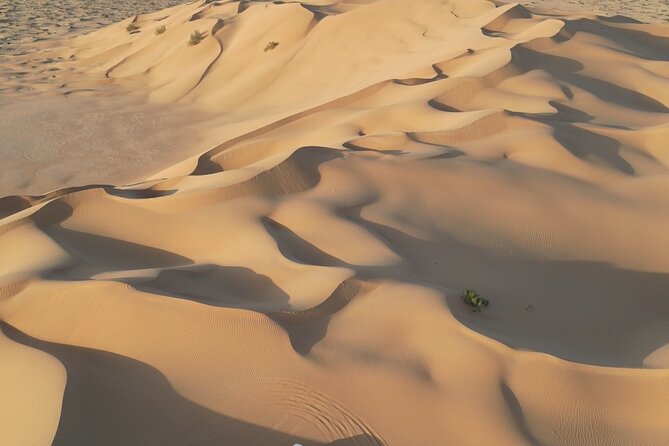
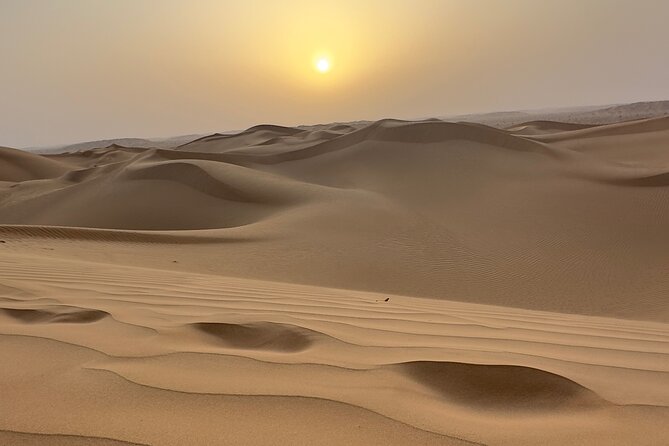
The Empty Quarter, or Rub’ al-Khali, is the tour’s great open-air finale. It is the largest continuous sand desert in the world, stretching across parts of Oman, Saudi Arabia, Yemen, and the United Arab Emirates. The Omani section is marked by sweeping dunes and a sense of scale that is hard to get in a smaller desert area.
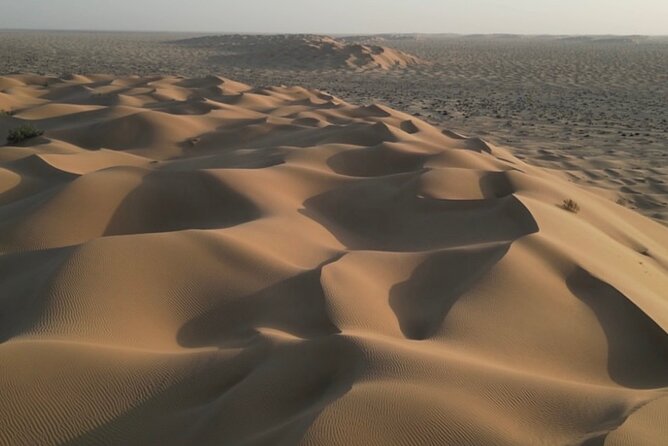
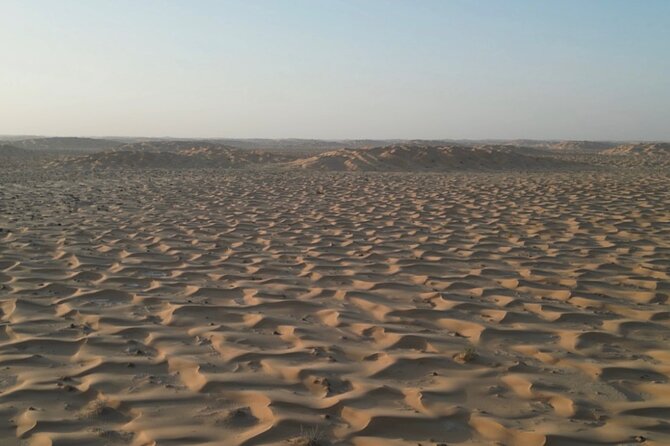
You will not see the Empty Quarter as a single landmark. Its attraction is the sheer amount of space. Dunes can rise more than 300 meters, and their curves change as the light shifts. The desert can look pale, gold, pink, or copper as the afternoon moves toward sunset.
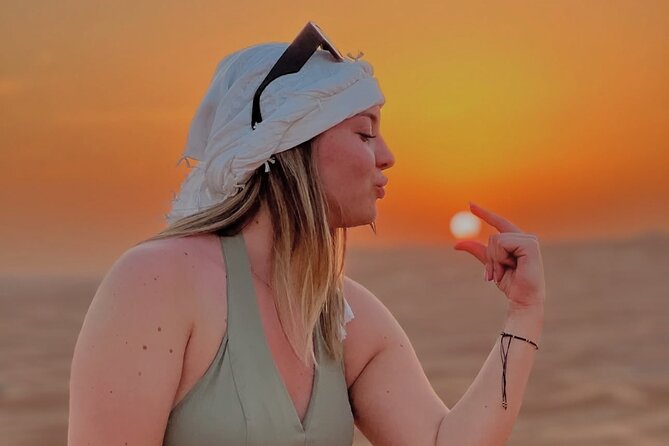
This is where the timing matters. Starting at 1:00 pm allows the route to reach the sand later in the day, when the light is softer than at midday. The sunset is included in the tour title and is a central part of the plan. Exact sunset timing changes through the year, so your guide will determine the best place and timing on the day.
The Empty Quarter is also a harsh environment. Heat can be extreme, rainfall is scarce, and there is little natural shelter. Even with transport and a guide, you should treat the setting with respect. Carry water, protect yourself from the sun, and bring a light layer for the evening if you dislike cooler desert air.
Wildlife is not the focus of this outing, but the desert supports specially adapted animals, including sand gazelles, Arabian oryx, and reptiles. You should not book this as a wildlife safari. Book it for the dunes, the silence, the scale, and the changing light.
The two-hour allocation gives you time to appreciate the setting rather than make a rushed stop. For many people, this will be the most memorable part of the day. The trade-off is that the stop comes after several hours of sightseeing and driving, so the full program may feel demanding.
Dinner at a Bedouin Camp
After the sunset desert stop, dinner is served at a Bedouin camp. This brings a human element to a day that otherwise focuses on trees, ruins, roads, and sand. You are not just returning to Salalah after taking photographs. You are given time to sit, eat, and enjoy a traditional-style desert setting.
The included refreshments are Omani tea, coffee, and snacks. Dinner is part of the experience, but the available details do not specify the menu, dietary options, or whether drinks beyond tea and coffee are included. If you have food restrictions, ask Ciao Salalah before booking rather than assuming the camp can adjust the meal.
The meal also affects the value of the price. At $150 per person, this is more than a short dune ride. You are paying for roughly eight hours, private participation, a guide, transport with pickup offered, several remote stops, sunset, and dinner. The price makes the most sense if you want a single organized day that reaches places difficult to combine independently.
It makes less sense if your priority is only a quick sunset photograph. In that case, a shorter desert outing could be a better fit. Here, the dinner is part of a long cultural and geographical route, not a separate luxury meal.
What the $150 Price Buys You
The cost should be judged against the route, not just the vehicle ride. You get a private tour for your own group, an English- and Italian-speaking guide, snacks, local tea and coffee, a Bedouin camp dinner, and access to four major stops across northern Dhofar and the Empty Quarter.
Ubar’s 3 OMR entrance fee is extra. That is a small additional charge, but it should be included in your planning. The tour has mobile ticketing and pickup is offered, which reduces some of the usual coordination needed for a remote desert trip.
The strongest value comes from convenience and range. Organizing Wadi Dawkah, Thumrait, Ubar, the Empty Quarter, sunset, and dinner on your own would require careful timing and reliable transport. The private format also means you are not sharing the day with a large mixed group.
The weakest value appears if you dislike long drives or have limited interest in archaeology and local towns. The route covers a lot of ground, and not every stop is a dramatic visual attraction. You are paying for the complete story of the region, not for nonstop dune activity.
The tour is currently highly rated, with 18 ratings and 100 percent recommending it. The strongest praise focuses on friendly organization, clear explanations, the breathtaking desert, and the quality of the dinner. One German-language rating specifically praised the sunset, Bedouin camp, food, and Mohammed’s explanations. Those points match the parts of the tour most likely to determine your satisfaction.
Who Should Book This Salalah Tour?
I would choose this tour if you want to see far more than Salalah’s immediate coastal area. It suits you if you enjoy combining nature, archaeology, local trade, and desert scenery in one day.
It is also a good match if you value a private guide. The ability to ask questions and travel only with your own group matters on a route where the context is as important as the sights. English and Italian are supported, which is useful for groups that need either language.
Families and most active visitors should be able to participate, since the tour states that most people can take part. Still, you should be comfortable with a long day, outdoor conditions, and time around stony ground and sand.
I would think twice if you want a relaxed half-day, a luxury dining event, or a tour focused only on dune driving. The schedule is broad and educational, with the desert sunset as its finale. That is its strength, but also its limitation.
You can cancel for a full refund up to 24 hours before the 1:00 pm start. Changes or cancellations within 24 hours are not refunded, so keep that cutoff in mind when arranging your Salalah plans.
Should You Book It?
Book this tour if you want one substantial day that explains why Dhofar matters. The combination of frankincense trees, an old trade center, Ubar’s ruins, and the Empty Quarter gives you a much fuller picture than a simple desert drive.
At $150 per person, it is best for visitors who value privacy, transport, guiding, sunset, and dinner as one package. Ask about the pickup point, dinner arrangements, and food requirements before paying, and budget an extra 3 OMR for Ubar. If you can handle the long route, this is a well-rounded way to reach Salalah’s remote northern country without arranging the pieces yourself.
FAQ
Where does the tour take place?
The tour starts in Salalah, Oman, and visits Wadi Dawkah, Thumrait, the lost city of Ubar, and the Empty Quarter.
What time does the tour start?
The stated start time is 1:00 pm.
How long does the tour last?
The tour lasts approximately eight hours.
Is pickup available?
Pickup is offered. The specific pickup arrangement should be confirmed when booking.
Is the tour private?
Yes. Only your group participates in the activity.
What languages does the guide speak?
The tour provides an English- and Italian-speaking guide.
Is dinner included?
Yes. Dinner at a Bedouin camp is part of the experience.
Are tea, coffee, and snacks included?
Yes. Omani local tea, coffee, and snacks are included.
Is admission to Ubar included?
No. Admission to the lost city of Ubar costs 3 OMR per person and is paid separately.
Can I cancel for a full refund?
Yes. You can cancel at least 24 hours before the start time for a full refund. Cancellations or changes made within 24 hours are not refunded.
More Places to Eat in Salalah
- Muscat: Group City Tour with Pickup and Lunch or Dinner
★ 4.3 · 89 reviews - Dubai: Desert Safari with BBQ Dinner
★ 4.6 · 30 reviews - Authentic Omani Home Dining
★ 5.0 · 19 reviews - Oman:Group Muscat City Tour With Pick Up & Free Lunch/Dinner
★ 4.6 · 19 reviews
Just added in Salalah
- West of Salalah private tour – fascinating mountains and beaches★ 5.0 · 9 reviews
- Salalah White Beaches & Panoramic Views of sea (Full Day Tour)★ 5.0 · 1 review
- Where Sea Meets Rock: A Scenic Journey to West Salalah’s Shores★ 5.0 · 5 reviews
- West Salalah Tour by VisitSalalah★ 5.0 · 6 reviews
- West Salalah Beaches and Blowholes★ 5.0 · 7 reviews
- Explore Samhan Mountain – Half-Day Getaway with Lunch Included.★ 5.0 · 10 reviews
- Private tour – Empty Quarter desert adventure – Wadi Dawka + Ubar★ 5.0 · 5 reviews
- Salalah East & West Combination★ 5.0 · 2 reviews
Oman Desert Safaris, compared.

Wahiba Desert and Wadi Bani Khalid Guided Group Tour
Read our review →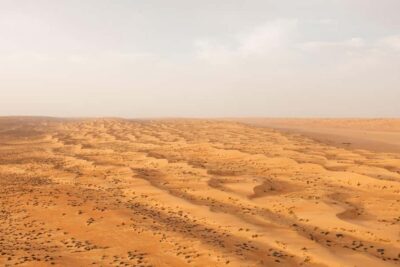


Full-Day Private Wahiba Sands Desert and Wadi Bani Khalid Tour
Read our review →
East Salalah Mountain Safari, Wadi Darbat, Beach, Camels, Dunes
Read our review →
Wadi Darbat, Jabal Samhan, Baobab, Mirbat Sand Dune
Read our review →Browse the lists this tour appears in