
REVIEW · MOUNTAIN TOURS IN OMAN
Jebel Safari – Tour della montagna
Ancient ports meet high mountain views. This private Salalah day trip brings together Omani culture and mountain scenery in one long, well-filled outing, from Taqa’s old governor’s house to the heights of Jebel Samhan. I especially like the visit to Sumhurram, where a former spice-trade port gives the day real historical weight, and the picnic near the Arabian leopard reserve, where the setting matters as much as the meal.
You also get several very different natural stops: the Tawi Ateer sinkhole, desert roses, dragon blood trees, Wadi Hinna’s baobabs, and the coast at Mirbat. The main consideration is the pace. Eight hours on mountain roads with many stops can feel full, and the listed price of $502.57 is best value for a private group of four rather than for one or two people.
In This Review
- Five details that make this Salalah tour special
- Starting with Taqa’s old governor’s house
- Khor Rori and the old port of Sumhurram
- Tawi Ateer, the bird’s well
- Reaching the high point of Jebel Samhan
- Driving through Wadi Hinna to the baobab forest
- Ending beside Mirbat’s traditional dhows
- How the eight-hour schedule feels
- Guide style and the feel of a private outing
- Who should book this mountain safari?
- Booking advice and cancellation
- Should you book the Jebel Safari?
- FAQ
- Where does the Jebel Safari tour take place?
- How long does the experience last?
- How much does the tour cost?
- Is the tour private?
- Is pickup offered?
- What is included at Sumhurram?
- Will the tour visit the Arabian leopard reserve?
- Is lunch included?
- Can service animals join the tour?
- What is the cancellation policy?
Five details that make this Salalah tour special
- Taqa’s old governor’s house gives you a look inside a traditional Omani home, not just a quick photo stop.
- Sumhurram and Khor Rori pair a UNESCO archaeological site with a striking coastal lagoon.
- Tawi Ateer sinkhole offers a dramatic geological stop with desert rose and dragon blood trees nearby.
- Jebel Samhan’s high point marks the start of the Arabian leopard national reserve and provides the setting for a picnic lunch.
- Wadi Hinna’s baobab forest adds an unexpected African-looking touch to southern Oman.
- Mirbat’s dhow boats finish the day with a connection to Oman’s continuing Indian Ocean fishing culture.
Starting with Taqa’s old governor’s house
The day begins in the village of Taqa, east of Salalah. The first cultural stop takes you into the former house of the city’s governor, where you can see the interior of a traditional Omani home.
This is a useful beginning because it gives you a human scale before the mountain roads and wide views take over. You are not simply looking at forts or ruins from outside. You get a sense of how rooms were arranged and how an important local household once functioned.
The experience is likely to appeal most if you enjoy places with a clear local connection. It is not presented as a long museum visit, so I would keep your expectations focused on atmosphere and traditional domestic design rather than a large collection of exhibits.
Taqa also helps set up the rest of the day. The route moves from village life to an old trading port, then into the mountains, and finally back toward the sea. That variety is one of the tour’s strongest features.
More Mountain Tours in Oman
- East Salalah Mountain Safari, Wadi Darbat, Beach, Camels, Dunes
★ 5.0 · 206 reviews - Salalah: Wadi Darbat, Jabal Samhan, Baobab, Mirbat Sand Dune
★ 4.6 · 178 reviews - Mountain Safari Private Tour
★ 5.0 · 105 reviews
Khor Rori and the old port of Sumhurram
Next comes Khor Rori, a lagoon with a very different feel from Salalah’s city beaches. Beside it sits Sumhurram, an ancient port built by the kingdom of Hadramout to control the spice trade across the Indian Ocean.
The site is included with admission, and its importance comes from its position. This was not an isolated settlement. It formed part of a larger trading network linking southern Arabia with routes across the water. Even if you are not an archaeology specialist, the location helps explain why this stretch of Dhofar mattered for centuries.
I like this stop because it gives the day a strong sense of place. You can connect the ruins to the lagoon, the coastline, and the wider trade routes instead of treating the archaeological site as a detached pile of stones.
Allow time to look beyond the main remains. Khor Rori adds atmosphere, while Sumhurram provides the historical explanation. Together they are more rewarding than either stop would be alone.
The practical drawback is that the tour covers a lot of ground afterward. If you prefer a slow archaeological visit with plenty of time for close study, the full mountain route may feel too busy. If you want a broad introduction to Dhofar, the combination works well.
Tawi Ateer, the bird’s well
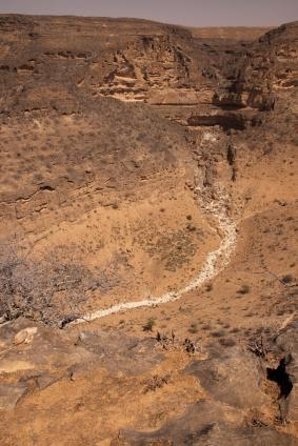
From the coast, the route climbs toward the high mountains. One of the key stops is Tawi Ateer, also called the bird’s well, a large sinkhole that gives the mountain section a dramatic focal point.
The name points to the natural character of the place, while the scale of the opening makes it more than a routine viewpoint. You can look into a deep geological hollow and then notice how plant life appears around it. The stop is especially interesting because it does not fit the dry, empty image many people have of Oman.
The surrounding area includes desert rose and dragon blood trees. These trees give the stop much of its visual interest, so take time to look at the vegetation rather than focusing only on the drop. The contrast between rock, hardy trees, and open sky is part of the appeal.
The description also identifies this as the second-largest sinkhole on earth. That is a striking fact, but the experience itself remains simple: a mountain stop, a view into the sinkhole, and time to take in the setting. You should not expect an adventure activity or a technical geology presentation.
One reported mountain outing included an easy trek, so the route may suit people who want some walking without committing to a strenuous hike. Still, the exact walking conditions are not specified, and you should be prepared for uneven ground around natural viewpoints.
Reaching the high point of Jebel Samhan
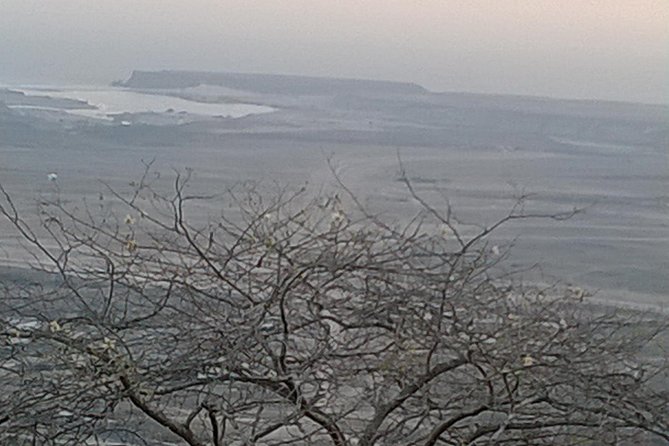
The drive continues to the highest panoramic point in the region. This is the day’s big mountain moment, with broad views across the high country and a sense of how sharply Dhofar rises behind Salalah.
The viewpoint also marks the beginning of the national reserve of the Arabian leopard. That does not mean you should expect to see a leopard. The value is in knowing that this remote mountain country forms part of a protected area connected with one of Arabia’s rarest animals.
I like this detail because it adds meaning to the view. You are not only stopping at a scenic overlook. You are reaching the edge of a protected mountain environment and seeing why its distance and rugged ground matter.
The picnic lunch takes place at this high panoramic point. One account of the day describes an Arabic-style lunch, while the tour details specify a picnic. Either way, lunch is built into the outing rather than treated as a separate restaurant stop.
That matters for the schedule. You can eat in the mountains without breaking the route for a long meal in town. It also makes the high point a natural pause after the climb.
The tradeoff is weather and exposure. Mountain conditions can differ from Salalah, and the tour details do not promise shade, shelter, or a particular menu. Bring a practical attitude and be ready for an outdoor meal.
More things to do in Salalah:
- Sunset Desert Safari Salalah Tour in Rub Al Khali – Empty Quarter
★ 5.0 · 91 reviews - Salalah: Sunset Desert Safari – Rub Al Khali – Empty Quarter
★ 4.6 · 79 reviews - West Salalah Tour – Caribbean of Orient – Fazayah Beach with City
★ 5.0 · 74 reviews - West Salalah: Caribbean of the Orient Fazayah Beaches & City
★ 4.5 · 60 reviews
Driving through Wadi Hinna to the baobab forest
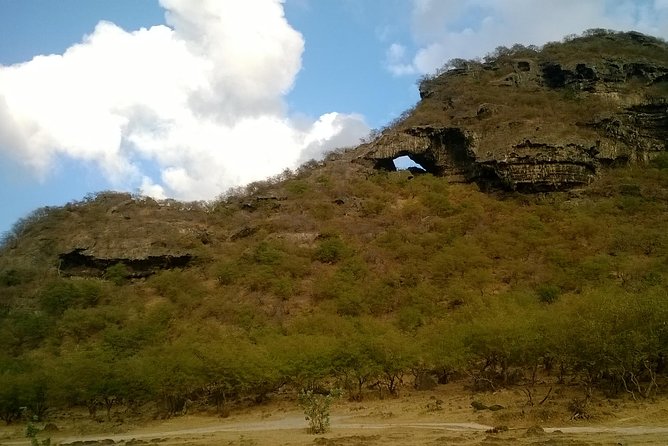
After the high point, the route drops through Wadi Hinna. The change in scenery is part of what makes this a strong full-day route. You move from exposed mountain views to a valley setting with a forest of baobab trees.
Baobabs are an unusual sight in this part of Oman. Their thick trunks and spare branches give the grove a shape that feels almost unreal, especially after the rocky heights. This is the kind of stop that rewards a little patience. Look at the individual trees, their forms, and the way they sit in the wadi rather than treating the forest as a single photo backdrop.
The drive itself is also part of the experience. This is not a tour built around one major monument. It shows you how the region changes as you cross it, and the route from Jebel Samhan through Wadi Hinna provides that contrast.
A stop in a wadi can be less predictable than a formal attraction. The information does not specify walking time, facilities, or the exact number of trees you will see. I would view it as a scenic nature stop rather than a structured visit with a long interpretive program.
Ending beside Mirbat’s traditional dhows
The final major stop is Mirbat, a coastal town where fishermen still sail traditional Indian Ocean boats known as dhows.
This ending works because it brings the day back to the sea. You begin with a former trading port at Khor Rori and finish in a town linked to working boats and fishing. The two coastal stops frame the mountain route with a shared connection to Dhofar’s maritime life.
For you, the main appeal will be the sense of continuity. Ancient trade is not the only story here. Mirbat connects the region’s past with a seafaring tradition that remains visible in the town today.
The stop is not described as a boat ride, so do not book expecting to sail on a dhow. You will visit Mirbat and see the traditional boats, but the tour details do not promise a cruise, fishing trip, or time aboard a vessel.
That distinction helps keep expectations realistic. This is a sightseeing visit, not a water activity. It is still a fitting final stop before the drive back to Salalah.
How the eight-hour schedule feels
An eight-hour day gives this tour room to cover Taqa, Khor Rori, Sumhurram, the mountain viewpoints, Wadi Hinna, and Mirbat. You get a wide sample of the area instead of spending most of the day at one site.
I would choose this route if you have one full day available and want the greatest variety. It combines homes, archaeology, a lagoon, sinkholes, mountain views, protected habitat, trees, and boats. Few shorter outings can offer that range.
The cost is $502.57 per group of up to four people. For four people, that works out to about $125.64 per person. For two people, it is roughly $251.29 each, and for a solo booking the price is much harder to justify.
That pricing makes the private format important. Only your group participates, so you are not tied to a large coach schedule or other people’s pace. Pickup is offered, which can simplify the start of a long day in Salalah, and a mobile ticket keeps the booking easy to carry.
The price is good value when four people share it and want a private route with transport, a guide, admission to the archaeological site, and picnic lunch included in the day’s plan. It is weaker value for a small party unless privacy and convenience are worth the extra cost.
Guide style and the feel of a private outing
The tour is operated by DhoIT, or Dhofar International Tourism. The published material identifies Salim as a guide on a mountain day, and Geraldina as an Italian-speaking contact for arrangements. If speaking Italian matters to you, it is sensible to request that when booking rather than assume every departure will have the same guide.
A private tour can also make the mountain section more comfortable. You have your own group, and the guide can potentially shape the rhythm around the time available. The description confirms that the activity is private, but it does not guarantee extra stops or a fully custom itinerary.
One account of the day included an easy trek, an Arabic-style lunch, and added stops chosen by the guide when time allowed. That suggests some flexibility may be possible, though you should treat additional stops as a bonus rather than part of the guaranteed route.
The most useful approach is to tell the operator what matters most before departure. If you care most about Sumhurram, the sinkholes, the baobabs, or photography at the high point, say so early.
Who should book this mountain safari?
I would recommend this tour for you if you want a full picture of Dhofar in one day and like variety more than a slow, single-site visit. It suits couples, families, and small groups who can share the group price and prefer a private vehicle.
It is also a good match if you enjoy natural viewpoints but do not want a demanding trek. The mountain route includes an easy trek in one reported outing, though the tour is not sold as a hiking expedition.
History-minded people will appreciate the old governor’s home and Sumhurram. Nature lovers get the sinkhole, unusual trees, the high reserve area, and Wadi Hinna. Anyone interested in coastal culture gets Mirbat and its dhows.
I would be more cautious if you dislike long drives, outdoor lunches, or a tightly packed day. The route covers a large area, and the tour details do not give exact timings at every stop. You should also choose another outing if your main goal is a boat trip, a serious hike, or a long archaeology visit.
Service animals are allowed, and the activity states that most people can participate. That is useful, but it does not provide detailed information about trail surfaces or facilities. If you have specific mobility needs, ask the operator before booking.
Booking advice and cancellation
You receive confirmation when you book, and the experience is available with a mobile ticket. Pickup is offered, which is helpful for an eight-hour outing, but you should confirm the pickup point and time with DhoIT before the day begins.
Free cancellation applies if you cancel at least 24 hours before the experience starts. Cancellations or changes made inside that 24-hour window are not accepted for a refund, and the cut-off uses local time in Oman.
That policy is fair for a private vehicle and guide, but it rewards early decisions. If your Salalah plans are uncertain, do not wait until the last day to change this booking.
Should you book the Jebel Safari?
Book it if you want one substantial day that links southern Oman’s coast, archaeology, mountains, valleys, and traditional boats. The strongest reasons are the unusual sequence of stops, the private format, and the chance to share the $502.57 cost across four people.
Skip it if you want a relaxed morning, a dedicated archaeological tour, or an activity centered on swimming or boating. For a small group, calculate the per-person cost first. For four people who value privacy and want to see far more than Salalah’s immediate sights, this is a well-rounded choice with genuine variety.
FAQ
Where does the Jebel Safari tour take place?
The tour begins from Salalah and visits Taqa, Khor Rori, Sumhurram, the Jebel Samhan mountain area, Wadi Hinna, and Mirbat.
How long does the experience last?
The tour lasts approximately eight hours.
How much does the tour cost?
The listed price is $502.57 per group of up to four people.
Is the tour private?
Yes. Only your group participates in the activity.
Is pickup offered?
Yes, pickup is offered.
What is included at Sumhurram?
Admission to the archaeological site of Sumhurram is included.
Will the tour visit the Arabian leopard reserve?
The route reaches the highest panoramic point where the national reserve of the Arabian leopard begins. The tour details do not promise a leopard sighting.
Is lunch included?
The route includes a picnic lunch at the highest panoramic point. A reported outing described the meal as Arabic-style.
Can service animals join the tour?
Yes. Service animals are allowed.
What is the cancellation policy?
You can cancel at least 24 hours before the local start time for a full refund. Cancellations or changes made less than 24 hours before the start time are not accepted for a refund.
Just added in Salalah
- West of Salalah private tour – fascinating mountains and beaches★ 5.0 · 9 reviews
- Salalah White Beaches & Panoramic Views of sea (Full Day Tour)★ 5.0 · 1 review
- Where Sea Meets Rock: A Scenic Journey to West Salalah’s Shores★ 5.0 · 5 reviews
- West Salalah Tour by VisitSalalah★ 5.0 · 6 reviews
- West Salalah Beaches and Blowholes★ 5.0 · 7 reviews
- Explore Samhan Mountain – Half-Day Getaway with Lunch Included.★ 5.0 · 10 reviews
- Private tour – Empty Quarter desert adventure – Wadi Dawka + Ubar★ 5.0 · 5 reviews
- Salalah East & West Combination★ 5.0 · 2 reviews
Mountain Tours in Oman, compared.
Nizwa Fort-Nizwa Souq-Misfah Al Arbyeen-Jebel Shams – Private Full Day Tour
Read our review →East Salalah Mountain Safari, Wadi Darbat, Beach, Camels, Dunes
Read our review →

Wadi Darbat, Jabal Samhan, Baobab, Mirbat Sand Dune
Read our review →
Browse the lists this tour appears in