
REVIEW · SALALAH TOURS
20 Days Oman Package with Salalah and Khasab Tour
Oman rewards the curious. This 20-day private tour links the country’s grand mosques, old forts, mountain villages, desert dunes, swimming wadis, and frankincense sites in one long journey. I especially like the broad mix of places and the use of an air-conditioned 4WD vehicle, which matters when roads lead from high mountain villages to hot desert camps and coastal valleys.
I also like the balance between famous sights and smaller cultural stops, such as Bait Al Safa, a traditional house turned museum, and the dhow-building area in Sur. The main drawback is the pace: you spend many hours on the road, and the package price of $6,880 per person does not include flights or all meals.
This is best for someone who wants Oman arranged from start to finish rather than a short city break. You will need moderate fitness for Wadi Shab, mountain walks, desert activities, and long touring days, but the private format gives your own group more breathing room than a large coach trip.
In This Review
- Key things to know before booking
- Muscat begins with grand buildings and old stone forts
- Forts, hot springs, and mountain villages
- Nizwa, Bahla, and Oman’s finest fort country
- Wahiba Sands delivers the desert portion
- Wadis, Sur, and the long coastal road
- Musandam brings sea time and a change of scenery
- Salalah’s frankincense country feels like another Oman
- The Empty Quarter finishes the journey on a grand scale
- What the $6,880 price includes, and what it does not
- Who should book this Oman tour?
- FAQ
- How long does the Oman package last?
- Where does the tour start and end?
- Are flights included in the package?
- Is this a private tour?
- Is an English-speaking guide provided?
- What type of vehicle is used?
- Are meals included?
- How fit do I need to be?
Key things to know before booking
- Two very different sides of Oman: The route moves from Muscat’s polished waterfront and grand buildings to mountain villages, desert camps, tropical-looking Dhofar, and the fjord-like coast of Musandam.
- A serious amount of driving: Several days include multiple stops spread across Oman. The 4WD vehicle and English-speaking Omani guide are important parts of the package.
- Wadi Shab is the most active day: Expect about a 35-minute hike to the pools, swimming between pools, and a swim through a narrow opening to a cave with a small waterfall.
- The desert section includes an overnight camp: Wahiba Sands brings sunset, sunrise, camel riding, a Bedouin family visit, sandboarding, quad biking, and dune bashing.
- Salalah adds a different climate and culture: You will see frankincense trees, ancient ports, springs, beaches, archaeological sites, and the Empty Quarter.
- The price needs careful checking: Accommodation for 19 days, transport, entrance fees, water, and a guide are included, but flights, lunches, personal costs, and some meals are not.
Muscat begins with grand buildings and old stone forts
Your first day is simple. You are collected at Muscat Airport and taken to your hotel, with no sightseeing packed into the arrival schedule. That is sensible after an international flight and gives you time to settle in.
The second day focuses on Muscat’s most recognizable sights. At about 8:30 AM, you visit Sultan Qaboos Grand Mosque, including its enormous handmade Iranian carpet. The carpet weighs 21 tons and can hold up to 20,000 worshippers, so this is not a quick roadside stop. Dress respectfully and expect the mosque visit to be one of the more formal parts of the tour.
The Royal Opera House follows. This is Oman’s main arts and culture center, and the visit gives the morning a different tone from the mosque. You then stop at Qurum Beach for photographs and a taste of Omani bread with honey and karak tea. That small food moment is valuable because it connects the sightseeing to everyday local flavors.
Muttrah Souk is given about two hours, which is useful. The market dates back roughly 200 years and sells souvenirs and handmade goods. You will have time to browse rather than simply step off the vehicle for a photograph. The route also includes Al Alam Palace and photo stops at the Portuguese forts of Al Jalali and Al Mirani. These forts are mainly viewed from outside, so do not expect a long interior tour of both.
More things to do in Salalah:
- 11 Days Tour Muscat and Salalah
★ 5.0 · 2 reviews - East Salalah Mountain Safari, Wadi Darbat, Beach, Camels, Dunes
★ 5.0 · 206 reviews - Salalah: Wadi Darbat, Jabal Samhan, Baobab, Mirbat Sand Dune
★ 4.6 · 178 reviews
Forts, hot springs, and mountain villages
Day three trades city sights for the foothills of the Hajar Mountains. Nakhal Fort rises above date plantations and the old village. The restored rooms, escape routes, passages, and high views make this one of the stronger historical stops on the tour.
Nearby Nakhl brings a gentler experience at a small green wadi and hot spring. You can bathe your feet in the warm water, but the description does not promise a full bathing session. This is a good short break before the rougher mountain roads.
Wadi Bani Awf covers a large area with villages and attractions including Snake Canyon. The day ends at Bilad Sayt, a mountain village surrounded by the Western Hajar Mountains. I like this section because it shows rural Oman without reducing every stop to a fort or shopping market. The tradeoff is that the schedule allows about an hour at each stop, which may feel short if you want to walk far into the villages.
Day four visits Al Hamra, a town dating back about 400 years, and Bait Al Safa. The latter is an old house converted into a living Omani museum, making it one of the better places to understand domestic life and traditional building methods.
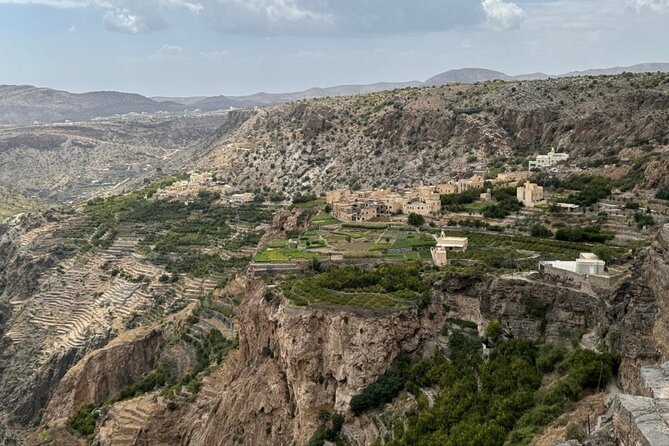
Misfat Al Abriyyin is another highlight. The village has some of Oman’s oldest preserved houses, set in the mountains. After that, you continue toward Jebel Shams, known as the Grand Canyon of Oman, reaching about 3,009 meters. The mountain views are a major reason to take this route, though the elevation and winding roads may be tiring for some people.
Nizwa, Bahla, and Oman’s finest fort country
Day five keeps the focus on Oman’s historic interior. Bahla Fort has mud-brick walls and towers built on stone foundations. The nearby pottery tradition adds a working craft element to the visit, rather than presenting the fort as a silent monument.
Jabreen Castle is described as one of Oman’s most beautiful forts. Its interiors are a useful contrast to the more rugged ruins at Bahla. Nizwa Fort then gives you broad views over the old town and nearby mountains, while Nizwa Souq allows time to look for Omani silver and handmade items.
The included entrance fees matter here because several major sites are concentrated in a short period. Still, the schedule can feel full. If you are an enthusiastic shopper, one hour at Nizwa Souq may disappear quickly.
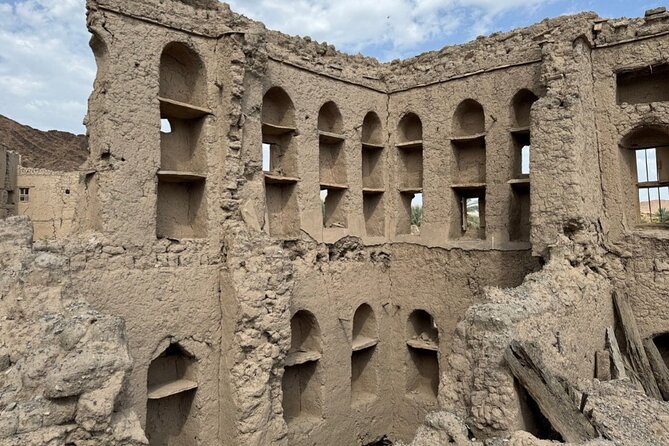
Day six begins at Falaj Daris, part of Oman’s UNESCO-listed aflaj irrigation system. These channels show how communities moved and shared water across dry country. Birkat Al Mouz adds old mud-brick ruins and colorful doors, followed by another look at the aflaj system at Al Kattmyn.
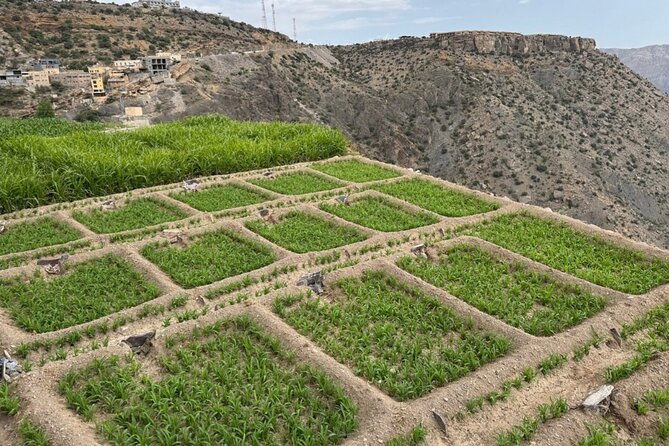
The route then climbs to Jebel Akhdar, or the Green Mountain, which reaches about 2,980 meters. The Saiq Plateau sits around 2,000 meters above sea level. Al Suwjara gives you an example of an old village built with mud and stone, while Wadi Bani Habib offers a walk among ruined houses and an area known for walnuts and pomegranates.
You should bring sturdy shoes for this part. The itinerary lists hiking, but it does not give a precise trail length or difficulty. Ask your guide how much walking is planned on the day.
Wahiba Sands delivers the desert portion
Day seven moves toward Ibra and Wahiba Sands. Ibra was once an important center for trade, religion, education, and art, so it gives useful context before the desert section begins.
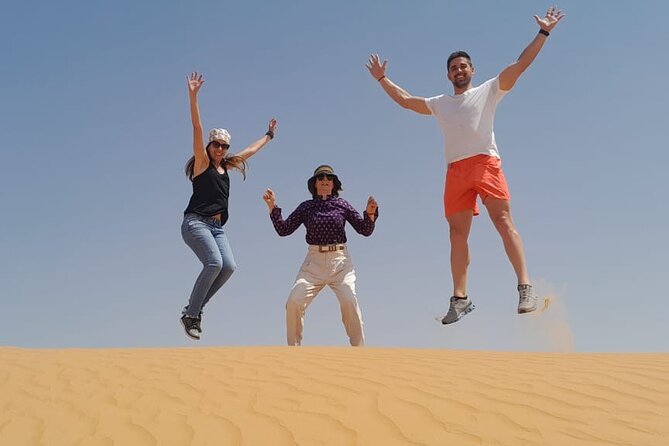
Wahiba Sands is the kind of place where timing matters. You watch the sunset from the golden dunes, take a camel ride, and visit a traditional Bedouin family. That visit may be the most personal cultural moment of the desert stay, though the schedule does not specify how long you spend with the family.
The next morning starts with sunrise from the dunes. You then have time for camel riding, sandboarding, quad biking, and dune bashing. These activities are not all described as included extras, so confirm the costs before booking or starting them. The two-night desert section is a good break from forts and museums, but desert temperatures and basic camp conditions can test your comfort.
More things to do in Muscat:
- Muscat: Daymaniat Islands Snorkeling Trip with Brunch
★ 4.7 · 2,317 reviews - From Muscat: Wadi Shab & Bimmah Sinkhole Full-Day Tour
★ 4.8 · 1,862 reviews - Muscat: Wahiba Desert and Wadi Bani Khalid Guided Group Tour
★ 4.8 · 820 reviews - Muscat: Half-Day Sightseeing Essentials Tour and Audio Guide
★ 4.2 · 598 reviews
Wadis, Sur, and the long coastal road
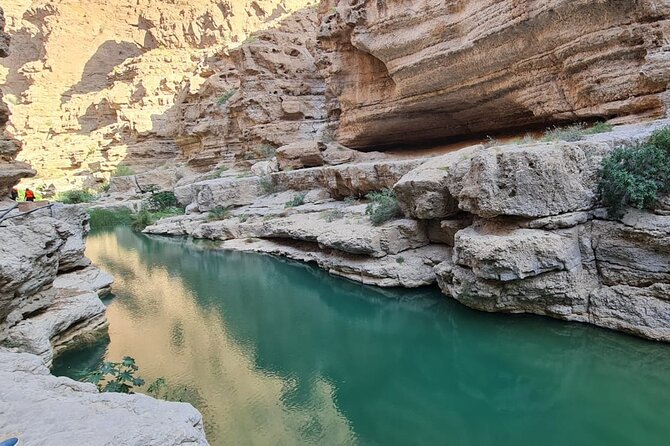
Day nine begins at Wadi Bani Khalid, one of Oman’s largest and most attractive wadis. You can swim, sunbathe, relax, or picnic beside the canyon pools. Pack suitable swimwear and a towel where practical, since water time is a real part of the day.
The route also visits an Omani ghazal farm in Al Kamel, then continues to Sur. Sur is known for watchtowers, lighthouses, old fortresses, and traditional wooden dhow construction. The dhow factory is especially worthwhile because you can see the craft behind the boats rather than only looking at finished displays.
Day ten is one of the tour’s biggest outdoor days. Wadi Tiwi is a short photo stop, followed by about four hours at Wadi Shab. The walk into the canyon takes around 35 minutes, leading to clear pools where you can swim from one to another. At the final pool, you swim through an opening in the rocks to reach a narrow cave with a small waterfall.
This is not a passive sightseeing stop. You need reasonable fitness, confidence in the water, and the willingness to walk on uneven ground. Afterward, the tour includes a romantic cave photo stop, Fins Beach, and Bimmah Sinkhole, a sea-side crater with a small lake at its base. The supplied description says the sinkhole is believed to have been created by a meteor, but that explanation is not established here as a confirmed fact.
Day eleven is reserved for the Ad Dimaniyat Islands, a protected area in the Gulf of Oman where sea turtles lay eggs. The five-hour outing gives the coastal section a proper marine focus. The information provided does not specify boat style, snorkeling arrangements, or lunch, so ask those questions before paying.
Musandam brings sea time and a change of scenery
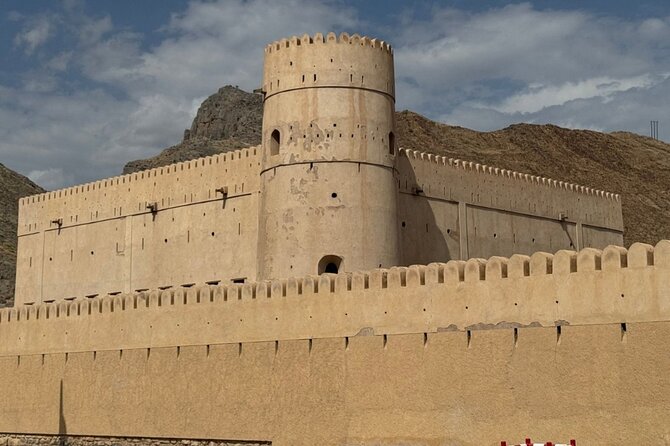
On day twelve, you fly from Muscat to Khasab, with airport transfers at both ends. After arrival, a city tour introduces Musandam Governorate, Oman’s northern territory separated from the rest of the country by the United Arab Emirates.
Khasab Castle is a restored 16th-century fort with a museum of Omani handicrafts. The tour also visits Wadi Qadah and the old village of Tawi, where you can see rock carvings of camels, ships, and warriors believed to be about 2,000 years old.
The schedule includes several short vehicle transfers and about 30 minutes at some locations. That means this is more of an introduction to Khasab than a slow archaeological day. The private air-conditioned vehicle should make these short hops comfortable.
Day thirteen turns toward the sea. The cruise begins from Dibba Harbour and includes swimming, snorkeling, lunch at Al Haffa Beach, and a fishing session before returning to the harbor. The listed times add up to a long day, with two hours at the first section, three at Al Haffa, and three for the fishing and return portion.
Because the itinerary names Dibba Harbour rather than Khasab Harbour, confirm exactly where you board and how transport is handled. This is an important practical detail, not a minor footnote.
Salalah’s frankincense country feels like another Oman
Day fourteen returns you to Muscat by air for an overnight stay. Day fifteen then brings another flight, this time to Salalah. The airport pickup leads into city sightseeing, including Sultan Qaboos Mosque, Al Baleed Archaeological Park and Museum, and Haffa Souq.
Al Baleed presents local and national history through archaeology and museum displays. Haffa Souq is the place to shop for handicrafts, perfumes, and Salalah’s famous frankincense. I would save some luggage space for this section, since frankincense is one of Dhofar’s defining products.
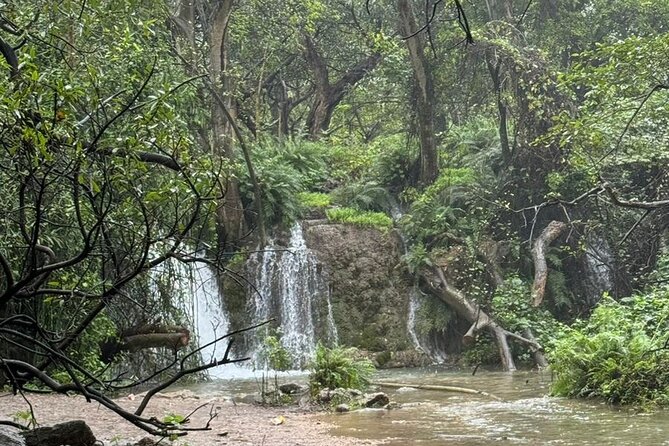
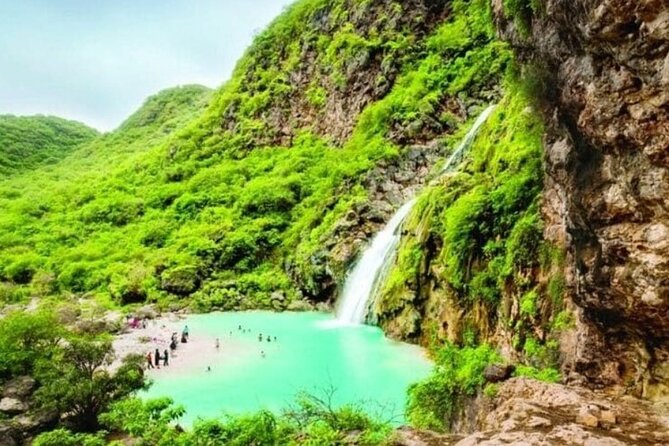
Day sixteen visits Taqah Castle, the ancient port of Sumharam, Wadi Darbat, and Ain Razat. Sumharam was an important port about 2,000 years ago, tied to the old frankincense trade. Wadi Darbat brings plants, trees, birds, flowers, and optional walking trails, while Ain Razat is known for springs that flow from the hillside.
Day seventeen follows the Frankincense Trail to see Boswellia sacra trees. Dhofar’s frankincense was once more valuable than gold, and this stop gives meaning to the products you see in Haffa Souq.
The route continues to Mughsail Beach, a long stretch of blue water and white sand, then Nabi Ayoub’s Tomb, associated with Prophet Job. The tomb site includes a mosque and sits on Jabal Al Qar. This day combines natural scenery, religious tradition, and trade history without requiring extreme activity.
The Empty Quarter finishes the journey on a grand scale
Day eighteen is the longest Salalah outing. Pickup is at about 12:30 PM, followed by lunch in Thamrit after roughly 80 kilometers, then the Ubar site and a desert camp about 10 kilometers farther into the Empty Quarter. Sunset is the main event.
Eight hours on the road is a lot, but the Empty Quarter is a fitting final chapter after Wahiba Sands. The two deserts are not simply interchangeable stops: this final section is built around distance, ancient settlement, and the feeling of reaching a remote edge of Oman.
After breakfast at camp on day nineteen, you return to Crowne Plaza Hotel Salalah for a rest day. That pause is welcome after nearly three weeks of movement. Day twenty provides the final transfer to Salalah Airport.
What the $6,880 price includes, and what it does not
At $6,880 per person, this is a major purchase. The value depends heavily on how many people are in your private group, since the trip is private and only your group participates. For a solo traveler, the cost is harder to justify. For a small group, the fixed transport, guide, accommodation, airport transfers, and long-distance planning become more reasonable.
The package includes 19 days of accommodation, an English-speaking Omani guide, an air-conditioned 4WD vehicle, bottled water, and applicable entrance fees. Breakfast is listed as optional for 19 meals, and dinner is listed as optional for 10 meals, so you should clarify the exact meal plan before booking.
Flights are not included. That is especially important because the route includes Muscat to Khasab, Khasab back to Muscat, Muscat to Salalah, and the return flight from Salalah. Lunches are also separate, estimated at about 3 to 5 OMR per person, along with personal purchases and any meals not specified.
The cancellation terms allow a full refund if you cancel at least three full days before the start time. Poor weather can also lead to a different date or a full refund.
Who should book this Oman tour?
Book it if you want to see nearly every major type of Omani setting in one organized trip: city, fort, village, mountain, desert, wadi, island, northern coast, southern coast, and frankincense country.
It suits couples, families, and small private groups who value convenience and do not want to arrange several hotels, domestic flights, 4WD transfers, and remote excursions themselves. It also works for a solo traveler who places a high value on having a dedicated route and guide, though the price is a serious consideration.
Think twice if you prefer slow travel, long afternoons in one town, or a short list of carefully chosen sights. This is a packed national tour, with many one-hour stops and several long drives. You should also be comfortable with moderate physical activity, swimming at Wadi Shab and Wadi Bani Khalid, mountain walks, and desert conditions.
FAQ
How long does the Oman package last?
The package lasts approximately 20 days and includes 19 days of accommodation.
Where does the tour start and end?
It starts in Muscat, Oman, with airport pickup. The final transfer is to Salalah Airport on day twenty.
Are flights included in the package?
No. Flight tickets are not included. The route includes flights between Muscat, Khasab, and Salalah, so you should budget for them separately.
Is this a private tour?
Yes. Only your group participates in the activity.
Is an English-speaking guide provided?
Yes. An Omani tour guide who speaks English is included.
What type of vehicle is used?
Transportation is provided in an air-conditioned 4WD vehicle.
Are meals included?
Breakfast is listed as optional for 19 meals, and dinner is listed as optional for 10 meals. Lunch is not included and is estimated at about 3 to 5 OMR per person.
How fit do I need to be?
The tour requires a moderate level of physical fitness. Wadi Shab includes about a 35-minute hike and swimming between pools, while other days include mountain walks, desert activities, and long touring hours.
Just added in Muscat
- Wahiba Desert Safari Adventure , Swimm in Wadi Bani Khalid★ 4.5 · 2 reviews
- Wahiba Sands & Wadi Bani Khaled (Day Trip) -“Desert Safari”★ 5.0 · 1 review
- wadi shab and bimmah sinkhole tour from muscat★ 5.0 · 2 reviews
- Try scuba Diving Tours To Daymaniyat Islands.★ 5.0 · 12 reviews
- Wadi Bani Khalid – Wahiba Sands Desert – Sunset★ 4.0 · 1 review
- Wadi Shab &Bimmah Sinkhole &Heart shaped Cave &Pebble Beach★ 5.0 · 5 reviews
- Private 2-Day Guided Tour with Nizwa Friday Market Visit★ 5.0 · 2 reviews
- From Muscat Wadi Shab and Bimmah Sinkhole Tour★ 5.0 · 6 reviews
Salalah Tours, compared.
East Salalah Mountain Safari, Wadi Darbat, Beach, Camels, Dunes
Read our review →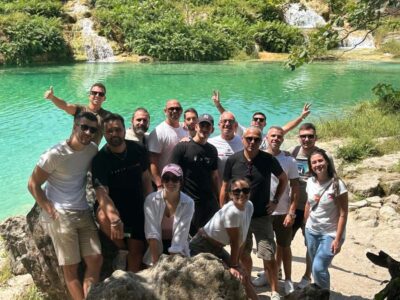
Wadi Darbat, Jabal Samhan, Baobab, Mirbat Sand Dune
Read our review →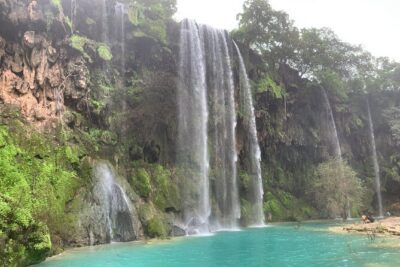
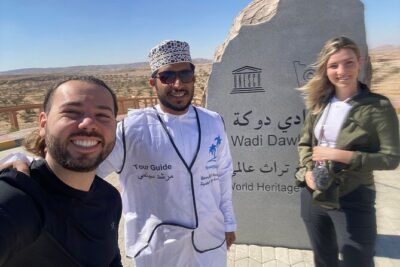
Sunset Desert Safari Salalah Tour in Rub Al Khali – Empty Quarter
Read our review →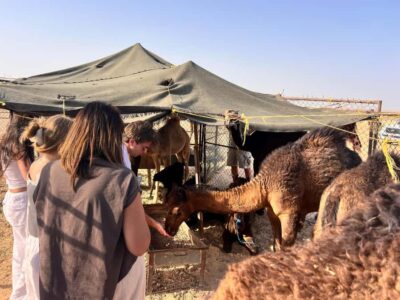
Sunset Desert Safari – Rub Al Khali – Empty Quarter
Read our review →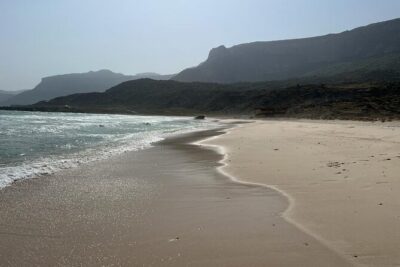
West Salalah Tour – Caribbean of Orient – Fazayah Beach with City
Read our review →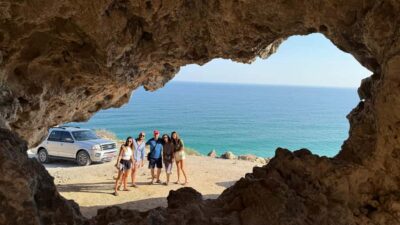
West Salalah: Caribbean of the Orient Fazayah Beaches & City
Read our review →
Salalah City Tour: Discover the Best of Oman’s Coastal Gem
Read our review →Browse the lists this tour appears in