
REVIEW · MOUNTAIN TOURS IN OMAN
5-Days Private Oman Tour – Mountains, Deserts & Coastline
Oman packs a lot into five days. This private route takes you from Muscat’s mosques and souqs to swimming holes, desert dunes, old forts, and high mountain viewpoints. I especially like the mix of active outdoor time and cultural stops, plus the freedom of having your own air-conditioned 4WD and English-speaking guide. The main catch is the pace: you cover a large part of Oman, so several days involve long drives and early starts.
I also like that the price includes four nights of accommodation, four breakfasts, three dinners, water, transportation, and entrance fees that apply to the planned visits. At $1,591 per person, this is not a budget tour, but the private format can make sense for couples, families, or small groups who want a guide and vehicle without joining strangers.
The standout guide experience depends on who is assigned to your group. Past praise has singled out Amer, Saeed, Khalil, Ali, Ahmed, and Waleed for safe driving, patience, thoughtful care, and useful local explanations. Ask for your guide’s name before departure, and confirm the exact hotels and optional activities.
In This Review
- What Makes This Oman Route Worth Considering
- Muscat Begins With Mosques, Opera, and Sea Views
- Wadi Shab Makes Day Two the Physical High Point
- Sur and Wadi Bani Khalid Lead Into the Desert
- Jebel Akhdar and Birkat Al Mouz Change the Pace
- Nizwa Fort and Jebel Shams Finish the Journey
- Private Transport Makes the Long Distances Easier
- What the $1,591 Price Really Covers
- The Guides Are a Major Part of the Experience
- Who Should Book This Tour?
- Should You Book This Oman Tour?
- FAQ
- How long is the Oman tour?
- Where does the tour begin and end?
- Is hotel pickup included?
- Is this a private tour?
- What type of vehicle is used?
- Is an English-speaking guide included?
- Are meals included?
- Is Wadi Shab suitable for everyone?
- Are camel rides included?
- Is turtle watching included?
- What is the cancellation policy?
What Makes This Oman Route Worth Considering
- Wadi Shab gives you Oman’s best active outing: Expect a boat crossing, about a 35-minute canyon walk, clear pools, and a swim into a narrow cave with a small waterfall.
- One private 4WD connects coast, desert, and mountains: You avoid changing vehicles between the major regions, with pickup and drop-off anywhere in the Muscat area.
- The Wahiba Sands overnight adds real variety: A dune drive, sunset from a high dune, camp dinner, and time around a fire replace another ordinary hotel night.
- Muscat’s first day is packed with useful cultural orientation: The Grand Mosque, Royal Opera House, Mutrah Souq, Qurum Beach, Al Alam Palace, and the Portuguese forts create a strong introduction.
- Nizwa and the mountain villages bring historical depth: Nizwa Fort, the souq, Al Hamra, Misfah Al Abryeen, and Jebel Shams show a different side of Oman.
- The pace rewards fit and flexible people: Wadi walks, swimming, sand driving, and mountain roads are exciting, but this is not a restful resort holiday.
Muscat Begins With Mosques, Opera, and Sea Views
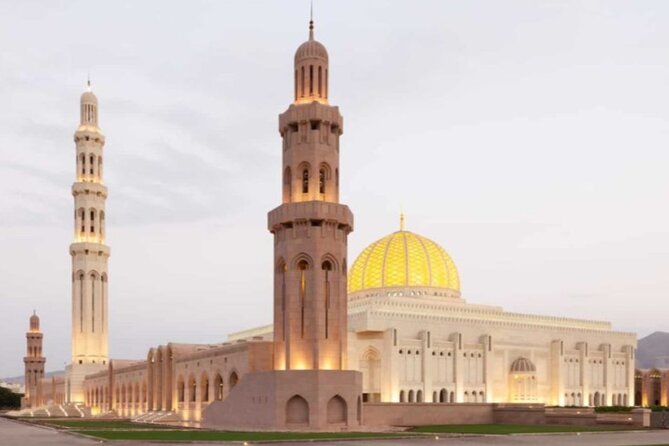
Your first morning begins around 8:30 at Sultan Qaboos Grand Mosque. The huge prayer hall is known for its single-piece Iranian carpet, weighing 21 tons and able to accommodate up to 20,000 worshippers. You get about an hour here, enough for the major interiors and a first look at Oman’s modern religious architecture.
Dress and visiting rules matter at a mosque, so check the day’s requirements with your tour operator before setting out. The tour gives you a guide to explain the site, which is useful because the scale can be hard to grasp without context.
Next comes the Royal Opera House, another one-hour stop. Its purpose is cultural rather than religious, and the visit helps show how Oman pairs traditional design with modern public institutions. Admission is included.
The drive through the ministries and opera district adds context, though it is not a major sightseeing stop in itself. I would treat this part of the morning as an orientation to Muscat rather than a series of must-see monuments.
At Qurum Beach, you get a short photo stop and a taste of Omani bread with honey and karak tea. This is a small detail, but it may be one of the more personal moments of the day. It gives you a chance to sit, sip, and see how an ordinary local snack fits into the route.
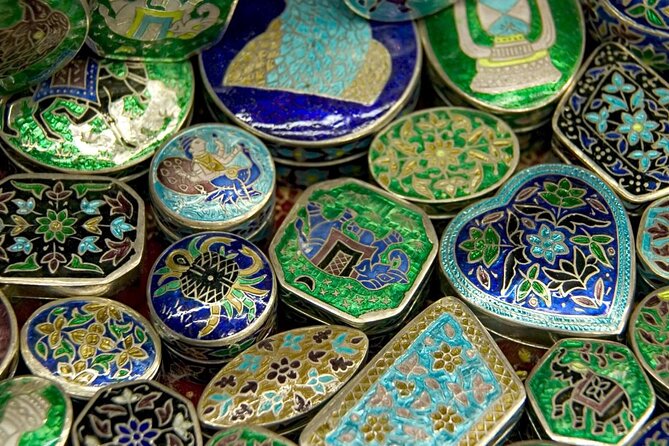
Mutrah Souq follows for about an hour. This old market, dating back roughly 200 years, is the place to browse for souvenirs, local crafts, spices, and silver items. You may find that one hour passes quickly, especially if you enjoy comparing silverwork or want to bargain politely.
The day ends around Old Muscat. Al Alam Palace is a brief photo stop, followed by views of Al Jalali and Al Mirani, the two Portuguese forts guarding the harbor. The fort visit is described as a photo stop, and admission is not included there. Do not expect a long interior tour. The value is the setting, the harbor views, and the chance to connect Muscat’s present-day capital with its defensive past.
More Mountain Tours in Oman
- From Muscat: Nizwa and Jebel Akhdar Tour with Lunch
★ 4.8 · 319 reviews - Nizwa Fort-Nizwa Souq-Misfah Al Arbyeen-Jebel Shams – Private Full Day Tour
★ 5.0 · 220 reviews - Full Day Private Nizwa/Jebel Akhdar
★ 5.0 · 205 reviews
Wadi Shab Makes Day Two the Physical High Point
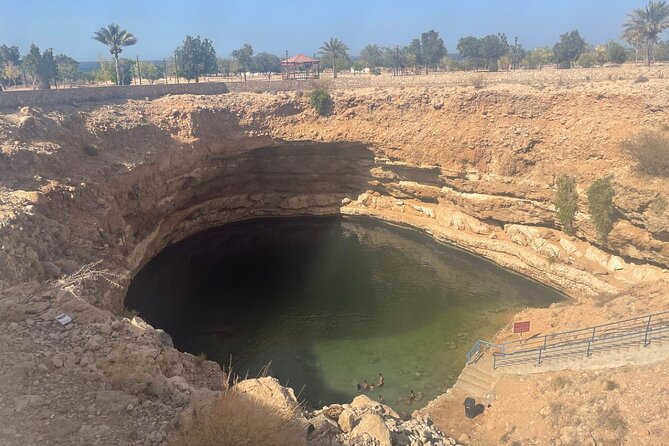
Day two starts around 8:30 AM with Bimmah Sinkhole, a large crater near the sea filled with a small lake. The site is often linked to a meteor impact, though the tour presents that as a belief rather than a confirmed fact. You have about an hour, so there is time to see the crater and, depending on conditions and your comfort, consider the water.
Fins Beach comes next. Its white shore, pebbly surface, and blue water make it a fine coastal pause. This is another one-hour stop, but do not expect a full beach day. The route is designed to show you several different settings rather than let you linger at one.
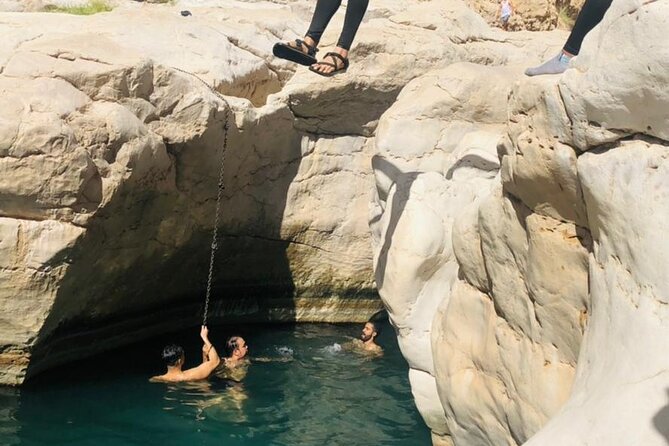
Then comes Wadi Shab, the trip’s most active and memorable section. You spend about five hours here. The canyon is lined with palms, and the route follows the effects of mountain water through rock and pools.
The walk up the wadi takes about 35 minutes according to the tour details. After that, you reach clear pools where you can swim from one to the next. The final section leads through an opening in the rocks into a narrow cave, where sunlight reaches the turquoise water and a small waterfall drops inside.
This is the stop where practical preparation matters most. You need a moderate level of fitness, comfortable footwear, swimwear, water, and a way to protect valuables from water. The tour provides drinking water, but lunch is not included, and five hours at an active wadi can work up a serious appetite.
The route then pauses at Wadi Tiwi for 30 minutes. Its palms and plantations give it a greener feel than the surrounding dry country. It is mainly a photo stop, so I would not see it as a second Wadi Shab. Instead, it is a short scenic contrast before the evening stop.
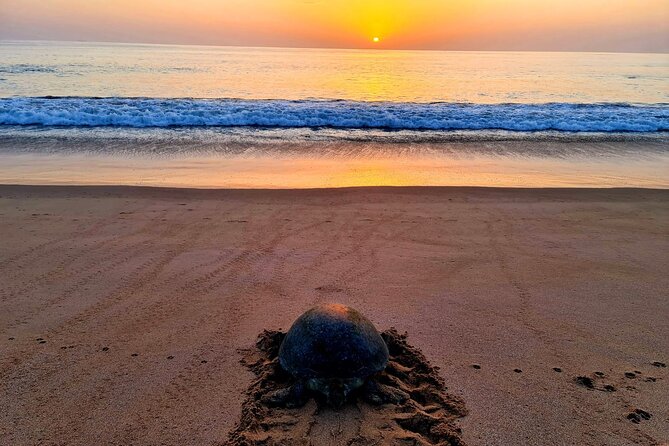
You spend the night at Turtle Beach Resort near Ras Al Hadd. Turtle watching is optional and costs 12 OMR per person, paid directly. Since the activity depends on local arrangements and conditions, confirm the timing with the resort or guide. The overnight is valuable because it prevents this coastal day from becoming an exhausting return drive to Muscat.
Sur and Wadi Bani Khalid Lead Into the Desert
After breakfast on day three, you visit Sur for about an hour. The city is associated with old forts and Oman’s seafaring tradition, so the stop adds a human and historic layer to the coast route.
The Dhow Factory is more distinctive. For roughly an hour, you can see traditional wooden dhows being built. This is the kind of stop I appreciate on a road trip because it shows a working craft rather than only a restored monument. Admission is included.
The schedule then includes a 30-minute visit to an Omani ghazal farm in Al Kamel, also called Asilel Farm in the supplied details. It is a brief stop, but it gives the day a local agricultural angle before the route turns inland.
Wadi Bani Khalid receives about three hours. Compared with Wadi Shab, this is presented as a place to swim, sunbathe, relax, and have a picnic among the canyon scenery. You get more unhurried time here, although lunch remains your responsibility.
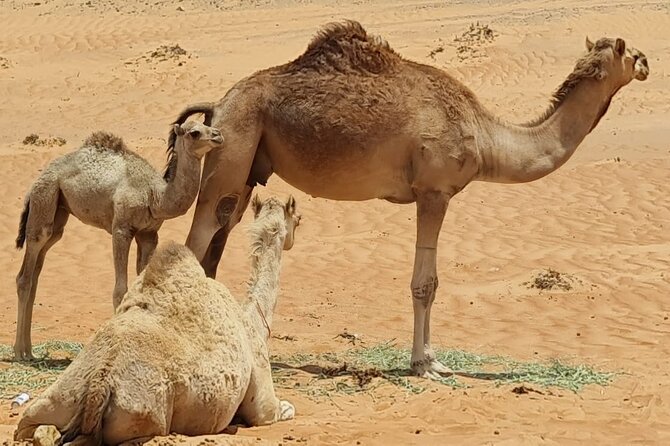
The route then reaches Wahiba Sands in the late afternoon. The desert camp is one of the trip’s big changes of mood. You can relax, take part in a 4WD drive over the dunes, watch sunset from a large dune, eat dinner at camp, and spend the evening around a fire.
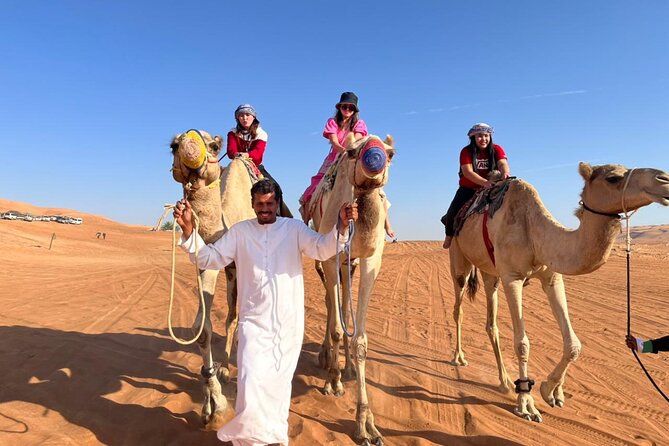
A camel ride costs 3 OMR per person, paid directly. It is optional, so you can choose between a short camel experience, the dune drive, or simply enjoying the desert at a slower pace. The schedule lists a 12-hour stay, which means you spend the night rather than rushing out after sunset.
The desert camp is included, but the exact comfort level is not detailed. Ask what type of tent, bathroom, and bedding are provided before booking if those details matter to you. The experience is atmospheric, but desert accommodation can feel basic compared with a city hotel.
Jebel Akhdar and Birkat Al Mouz Change the Pace
Day four moves into the Al Hajar Mountains, with Jebel Akhdar, or Green Mountain, as the first named stop. The mountain reaches about 2,980 meters, with the Saiq Plateau at roughly 2,000 meters. The listed stop is only three minutes, which likely means a quick viewpoint or drive-by rather than a full mountain visit.
That short timing is worth clarifying. If you expect a walk, village visit, or extended mountain viewpoint, ask the operator to explain what is planned. The route still gives you a strong change from the coast and desert, but the supplied schedule does not promise a long Jebel Akhdar experience.
After lunch, you drive toward Birkat Al Mouz, a mountain village with old ruins and views of traditional homes. The main stop lasts about an hour, followed by a 15-minute old-village viewpoint. This is a place for slow observation: stone houses, mountain slopes, and the shape of an older Omani settlement.
You also visit the Al Kattmyn aflaj irrigation system. Five Omani irrigation systems were added to the UNESCO World Heritage list in 2006, and this stop helps explain how villages supported crops in a dry country. The water channels are not simply scenic features. They are part of the practical system that made settled life possible.
Day four is less packed with headline attractions than days one through three. That can be a plus after swimming, sand driving, and long road sections. It can also feel light if you want a full day of sightseeing. I would ask whether lunch is arranged or whether you need to buy it yourself, since all lunches are excluded.
More things to do in Muscat:
- Muscat: Daymaniat Islands Snorkeling Trip with Brunch
★ 4.7 · 2,317 reviews - From Muscat: Wadi Shab & Bimmah Sinkhole Full-Day Tour
★ 4.8 · 1,862 reviews - Muscat: Wahiba Desert and Wadi Bani Khalid Guided Group Tour
★ 4.8 · 820 reviews - Muscat: Half-Day Sightseeing Essentials Tour and Audio Guide
★ 4.2 · 598 reviews
Nizwa Fort and Jebel Shams Finish the Journey
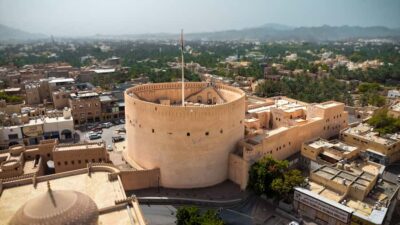
Nizwa was once Oman’s capital, and its fort is the main focus of the final morning. You have about an hour inside the museum and fort complex, with views over the old town and surrounding mountains. Admission is included.
Nizwa Fort is a good place to put the country’s defensive architecture into perspective. The thick walls, elevated position, and views help you understand why Nizwa mattered as a center of power. One hour gives you a useful visit, though history fans may want more time.
The Nizwa Souq follows for about an hour. It is a large market arranged in separate areas for produce, meat, and fish, with Omani silver and handmade goods also available. The setting behind a crenellated city wall gives the market a strong sense of place.
You then head toward Al Hamra and the old village near Misfah Al Abryeen. The two-hour stop is longer than many of the earlier cultural visits, which gives you time to see preserved houses and mountain settlement patterns. The wording groups Al Hamra and Misfah Al Abryeen together, so confirm exactly how much time you will spend in each.
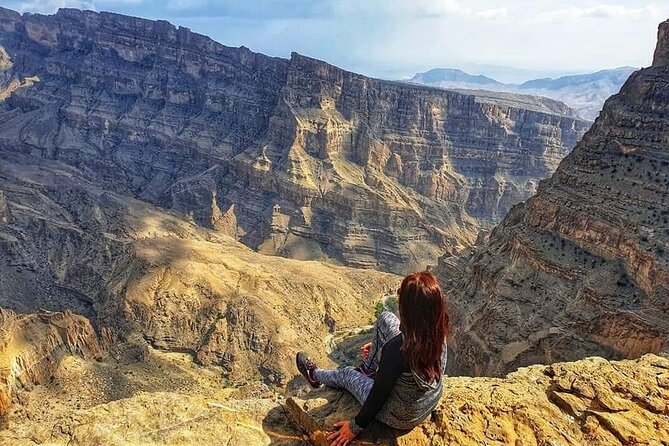
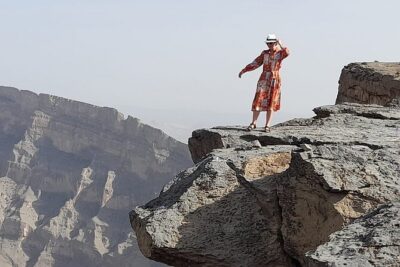
The final major stop is Jebel Shams, known as the Grand Canyon of Oman. The mountain is listed at about 3,009 meters, and the drive and visit take around four hours before returning to Muscat. This is a long final section, but the high viewpoints provide a fitting ending after the coast, desert, and wadis.
The return to Muscat means the last day is not a short farewell. You will spend substantial time on the road. Still, finishing with Jebel Shams lets you see Oman’s highest mountain region before returning to the capital.
Private Transport Makes the Long Distances Easier
The tour uses an air-conditioned 4WD and is private, meaning only your own group participates. That matters in Oman because the route covers coast roads, mountain areas, wadis, and desert tracks. You can ask for comfort breaks, adjust photo stops, and discuss the pace with your guide.
Pickup and drop-off are offered anywhere in the Muscat area. Water is included, as are an English-speaking Omani guide and the listed accommodation arrangements for single, double, twin, or triple occupancy.
The private format is especially useful for families and small groups. One past family booking included children aged 10 and 13 and a father-in-law in his 80s, with the guide praised for patience and attention. That does not make the route easy for everyone, but it shows how much a considerate guide can matter when a group has different energy levels.
The tour requires moderate physical fitness. Wadi Shab is the clearest reason, but the desert, mountain roads, heat, and repeated hotel changes also affect your comfort. Wear practical shoes, carry sun protection, and bring suitable swimwear.
What the $1,591 Price Really Covers
At $1,591 per person, the price is best judged against what you would need to arrange separately. You receive private transport, a guide, water, four nights of accommodation, four breakfasts, three dinners, and applicable entrance fees. For a couple or family, avoiding a rental 4WD, desert navigation, hotel planning, and long-distance driving can add real value.
The price does not include lunch or personal purchases. You should also budget for turtle watching at 12 OMR and camel riding at 3 OMR if you want those extras. Some admission details need checking because the package says applicable entrance fees are included, while the Al Jalali and Al Mirani fort stop says admission is not included.
The value is strongest if you want a broad first look at Oman without managing the logistics yourself. It is weaker if you prefer slow travel, long stays in one town, or independent meals and accommodation choices.
The Guides Are a Major Part of the Experience
Your guide will shape this trip more than any single monument. The most praised qualities have been safe driving, kindness, patience, flexibility, and care with comfort. Amer was singled out for thoughtful service, while Saeed received particular praise for safe driving. Khalil, Ali, Ahmed, and Waleed were also praised for local explanations, photography help, and attention to family needs.
Guide assignments can vary, so do not assume you will receive a particular person. Ask in advance, and make clear whether you want more time for photography, swimming, shopping, or historical explanation.
A useful touch reported from the operator is pre-trip advice about what to wear and bring for Wadi Bani Khalid and Wahiba Sands. Take that guidance seriously. The best guide relationship here is practical and conversational, helping you handle changing terrain and a packed schedule without fuss.
Who Should Book This Tour?
I would recommend this route if you have five days and want Oman’s major contrasts in one trip: Muscat, the sea, two wadis, Sur, a desert camp, mountain villages, Nizwa, and Jebel Shams.
It suits couples, families, and small groups who value a private vehicle and a guide. It also works well for first-time visitors who would rather spend their time seeing the country than planning every road connection.
I would hesitate if you dislike long drives, want guaranteed luxury camping, or have mobility limits that make a 35-minute canyon walk and swimming section unsuitable. The tour also deserves a little schedule clarification before payment, especially for Jebel Akhdar, the forts, the exact hotels, and the optional turtle program.
You can cancel for a full refund if you do so at least three full days before the local start time. Changes made inside that window are not accepted, and poor weather may lead to a new date or a full refund.
Should You Book This Oman Tour?
Book it if you want a private, active introduction to Oman and are happy to trade slow mornings for variety. The route gives you a strong first taste of the country’s mosques, markets, coast, wadis, sand dunes, irrigation villages, forts, and high mountain views.
Before paying, confirm the accommodation standard, guide assignment, exact Jebel Akhdar plan, lunch arrangements, and which entrance fees are covered. If those details match your expectations, the tour offers a convenient way to see a remarkable amount of Oman in five days without handling the driving yourself.
FAQ
How long is the Oman tour?
The tour lasts approximately five days and includes four nights of accommodation.
Where does the tour begin and end?
It begins in Muscat, Oman, and ends back at the meeting point in Muscat.
Is hotel pickup included?
Yes. Pickup and drop-off are offered anywhere in the Muscat area.
Is this a private tour?
Yes. Only your own group participates in the activity.
What type of vehicle is used?
Transportation is provided in an air-conditioned 4WD vehicle.
Is an English-speaking guide included?
Yes. An English-speaking Omani tour guide is included.
Are meals included?
Four breakfasts and three dinners are included. Lunch is not included.
Is Wadi Shab suitable for everyone?
The tour requires a moderate level of physical fitness. Wadi Shab includes about a 35-minute hike and swimming between pools, including a swim into a cave.
Are camel rides included?
No. A camel ride is optional and costs 3 OMR per person, paid directly.
Is turtle watching included?
No. Optional turtle watching costs 12 OMR per person, paid directly.
What is the cancellation policy?
You can receive a full refund if you cancel at least three full days before the experience start time. Cancellations or changes made less than three full days before the start are not accepted.
Just added in Muscat
- Wahiba Desert Safari Adventure , Swimm in Wadi Bani Khalid★ 4.5 · 2 reviews
- Wahiba Sands & Wadi Bani Khaled (Day Trip) -“Desert Safari”★ 5.0 · 1 review
- wadi shab and bimmah sinkhole tour from muscat★ 5.0 · 2 reviews
- Try scuba Diving Tours To Daymaniyat Islands.★ 5.0 · 12 reviews
- Wadi Bani Khalid – Wahiba Sands Desert – Sunset★ 4.0 · 1 review
- Wadi Shab &Bimmah Sinkhole &Heart shaped Cave &Pebble Beach★ 5.0 · 5 reviews
- Private 2-Day Guided Tour with Nizwa Friday Market Visit★ 5.0 · 2 reviews
- From Muscat Wadi Shab and Bimmah Sinkhole Tour★ 5.0 · 6 reviews
Mountain Tours in Oman, compared.
Nizwa Fort-Nizwa Souq-Misfah Al Arbyeen-Jebel Shams – Private Full Day Tour
Read our review →East Salalah Mountain Safari, Wadi Darbat, Beach, Camels, Dunes
Read our review →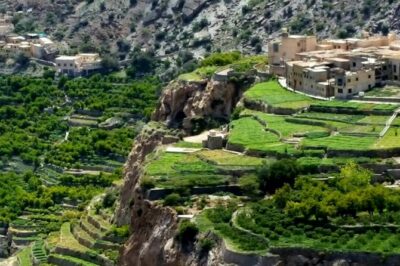
Wadi Darbat, Jabal Samhan, Baobab, Mirbat Sand Dune
Read our review →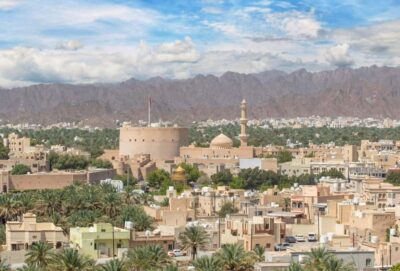
Browse the lists this tour appears in