
REVIEW · MUSCAT CITY TOURS
Muscat: Big Bus Hop-On Hop-Off Sightseeing Tour
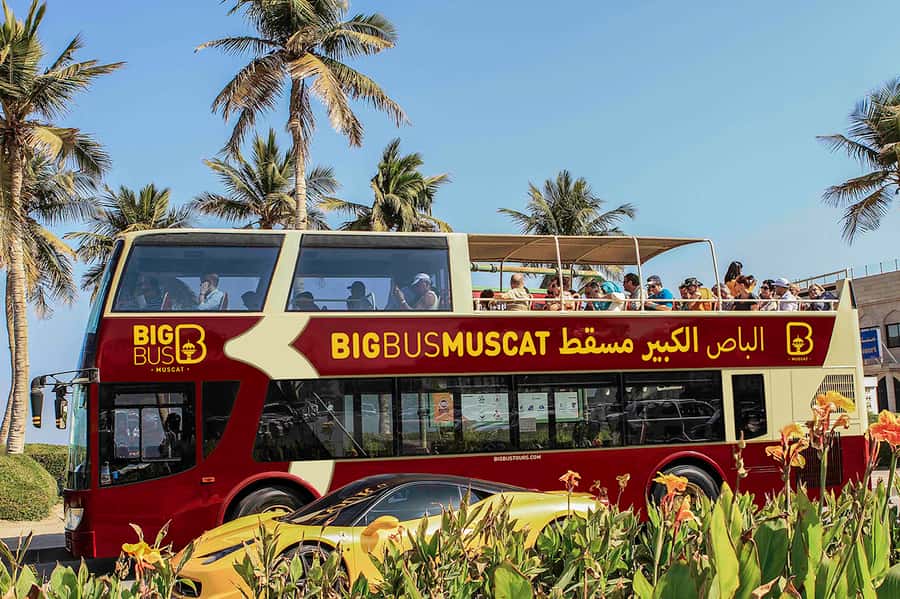
Muscat reveals itself slowly. This open-top bus gives you an easy first look at the Omani capital, linking forts, souks, museums, palaces, mountains, and the Sea of Oman without the hassle of arranging separate rides. I especially like the wide coastal and mountain views and the freedom to hop off at eight stops. The recorded commentary, offered in six languages, is another useful touch.
The main drawback is the price: $85 per person is a lot if you simply stay aboard for the full 1-hour-45-minute loop. The route can also feel long after the first hour, and the basic audio commentary will not satisfy anyone looking for a detailed lesson in Omani history.
In This Review
- Key points to know before you go
- Why this bus works well in spread-out Muscat
- Starting at Muttrah Souq and the Corniche
- Forts, palace walls, and Muscat’s old center
- Museums that add context to the ride
- Ruwi, parliament, and the city beyond the postcard view
- Marina Bandar Al Rowdha and the coastal views
- One day or two days: choosing the better ticket
- Comfort, timing, and the practical details
- Who will get the most from this Muscat tour?
- Should you book the Big Bus Muscat tour?
- FAQ
- How long is the full Big Bus Muscat loop?
- How many stops are on the Muscat route?
- Where can I board the bus?
- Which sights can I see on the tour?
- How long is the ticket valid?
- What languages are available for the audio guide?
- Is the bus wheelchair accessible?
- Are attraction entrance fees included?
Key points to know before you go
- The full loop takes 1 hour 45 minutes: Stay aboard for a broad city survey, but plan to hop off if you want the ride to feel less repetitive.
- Muttrah Souq is the main boarding point: You can also join at any of the eight stops along the route.
- The route links Muscat’s major sights: Stops cover forts, museums, the corniche, Al Alam Palace, the parliament building, and coastal viewpoints.
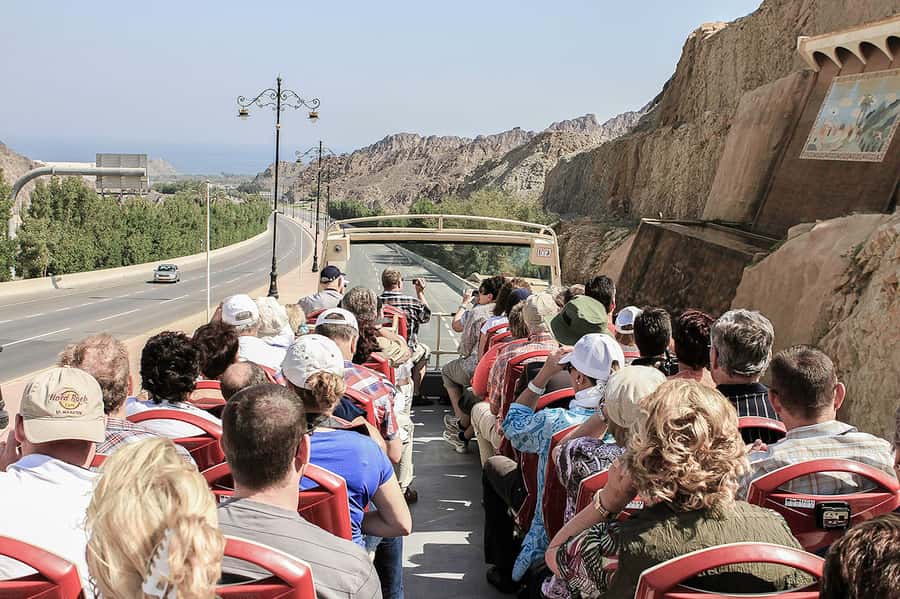
- The bus has three different seating zones: The front of the upper deck is air-conditioned, the middle has open sides with a sun canopy, and the rear is fully exposed.
- The audio is available in six languages: English, Spanish, French, German, Italian, and Arabic are offered through the digital commentary system.
- The app tracks buses live: This matters in Muscat, where waiting in the heat can quickly take the shine off a sightseeing stop.
Why this bus works well in spread-out Muscat

Muscat is not a compact old town that you can understand in one easy walk. Its sights stretch along the coast and through separate districts, with the Hajar mountains pressing close behind the city. Taxis can connect the dots, but a hop-on, hop-off bus gives you a simple route and a fixed sightseeing plan.
I see this tour as a city orientation first and a detailed attraction tour second. The full circuit lets you see how Muttrah, the palace district, Ruwi, and the coastal areas fit together. After that, you can choose the stops that deserve more time.
The bus is air-conditioned, which is important in Muscat’s heat. You still need to think carefully about where you sit. The front part of the upper deck is enclosed and cooled, while the middle has a canopy but open sides. The back is open to direct sun. The open sections offer better photographs, but the cool front section may be the wiser choice during the hottest part of the day.
More Muscat city tours:
- Muscat: Half-Day Sightseeing Essentials Tour and Audio Guide
★ 4.2 · 598 reviews - Muscat: Budget Friendly City Tour
★ 4.8 · 321 reviews - Half-Day Private Muscat City Tour – Top Landmarks in Just 4 Hours
★ 5.0 · 256 reviews
Starting at Muttrah Souq and the Corniche
The main boarding point is at the entrance to Muttrah Souq, making it the most practical place to begin. This is also one of the most useful stops for your own exploring. You can combine the bus ride with time in the covered market, then walk along the Muttrah Corniche near the waterfront.
Muttrah Souq gives the tour some local character from the start. Instead of beginning beside a generic transport terminal, you begin near one of Muscat’s best-known traditional shopping areas. The route then helps place the souq within the wider city, showing how the old commercial quarter connects with the forts, waterfront, and mountain backdrop.
Muttrah Fort is another key sight in this area. The fort sits above the old harbor and gives the district much of its visual drama. Entrance fees are not included, so you should budget separately if you want to go inside any attraction. The bus itself provides the view, but hopping off gives you the chance to explore at ground level.
The main weakness here is practical rather than scenic. At the principal boarding point, there may not be a staff member available to explain the next departure, ticket exchange, or boarding procedure. The downloadable app with live bus tracking becomes especially useful for this reason. Check the next bus before leaving the stop, rather than assuming one will arrive immediately.
Forts, palace walls, and Muscat’s old center
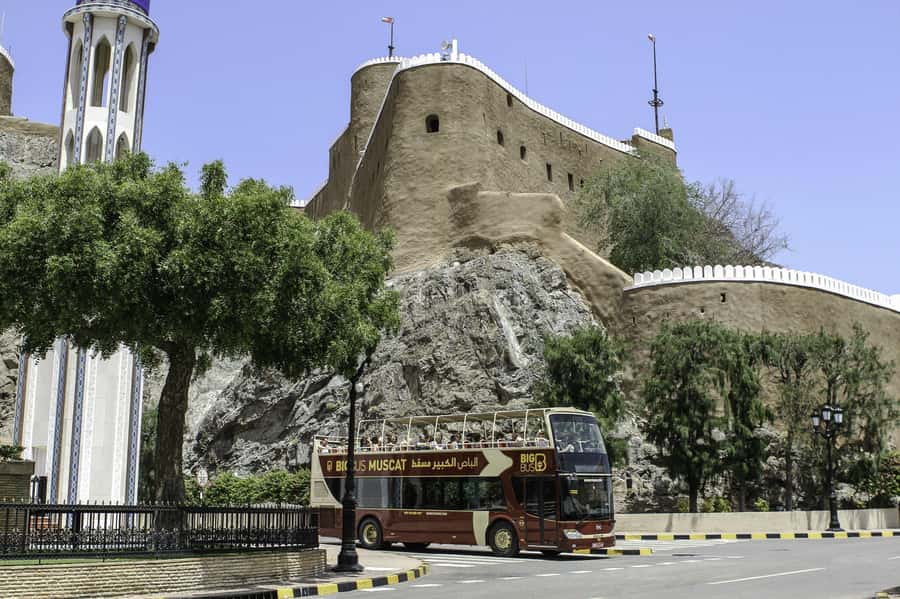
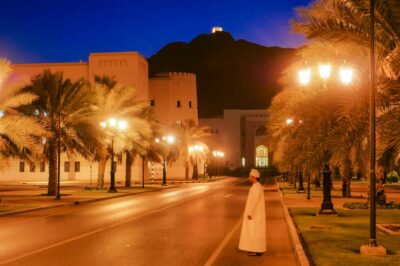
The route includes Al Mirani Fort, Al Jalali Fort, and Al Alam Palace, three of Muscat’s most recognizable sights. Together, they show how the city’s older defensive position now sits beside the ceremonial center of modern Oman.
Al Mirani and Al Jalali Forts face the harbor from rocky heights. Their position is the main attraction from the road: you see the forts framed by cliffs, water, and the clean white architecture Muscat is known for. The tour does not turn these into a full guided fort visit, and entrance fees are not included, so think of the bus as a way to reach and photograph the area rather than a substitute for exploring inside.
Al Alam Palace provides a different kind of stop. This is the Sultan’s ceremonial palace, with a grand setting in the old city. You can take in the palace exterior and its surroundings, while the audio commentary supplies basic context. Keep expectations realistic. The recording is designed to keep you oriented, not to provide a long scholarly account of royal history.
The best way to use this part of the route is to hop off and give yourself time. If you remain aboard, the forts and palace pass quickly. If you stop, you can slow down, take photographs, and connect the sights to the harbor and old city around them.
Museums that add context to the ride
Muscat’s museums make the bus route more worthwhile because they give you a way to move from views to context. The National Museum is included among the stops, as are Bait Al Zubair Museum and the Omani French Museum.
The National Museum is a natural choice if you want a broad introduction to Oman. Its presence on the route means you can pair a general city tour with a museum visit without arranging another ride. The admission fee is separate, and the bus ticket does not include entry.
Bait Al Zubair Museum offers another cultural stop on the route. The Omani French Museum adds a different angle, connecting Oman with its historic relationship with France. The listings do not promise a guided museum tour, so you should expect to explore these places independently after leaving the bus.
This is where the hop-on, hop-off format earns its keep. You can use the commentary for a quick overview, then choose one museum instead of trying to see everything. Trying to stop at every listed sight in one day would make the schedule feel rushed, especially since the loop itself takes nearly two hours without getting off.
More things to do in Muscat:
- Muscat: Daymaniat Islands Snorkeling Trip with Brunch
★ 4.7 · 2,317 reviews - From Muscat: Wadi Shab & Bimmah Sinkhole Full-Day Tour
★ 4.8 · 1,862 reviews - Muscat: Wahiba Desert and Wadi Bani Khalid Guided Group Tour
★ 4.8 · 820 reviews - Muscat: Wadi Bani Khalid Oasis & Oman Desert Tour
★ 4.8 · 434 reviews
Ruwi, parliament, and the city beyond the postcard view
The Ruwi Clock Tower stop helps show a side of Muscat that you might miss if you focus only on the palace and waterfront. Ruwi is part of the city’s wider urban fabric, and the clock tower gives the route a useful landmark away from the old harbor.
The Parliament Building, also called Majlis Oman, is another stop on the circuit. It adds a look at the country’s modern civic architecture. The route also includes the Sohar Boat, giving you another point of interest connected with Oman’s seafaring past.
These stops may be less immediately dramatic than Muttrah’s forts, but they help explain Muscat as a working capital rather than a chain of postcard views. If you have only a short time in the city, you may prefer to stay on the bus for this section. If you have two days, you can use the first circuit to decide which places deserve a closer look.
Marina Bandar Al Rowdha and the coastal views
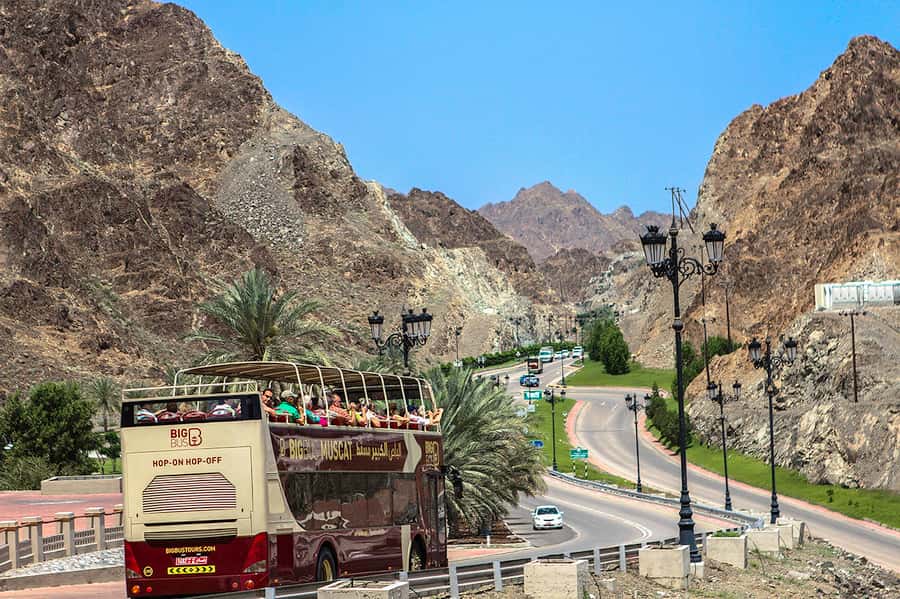
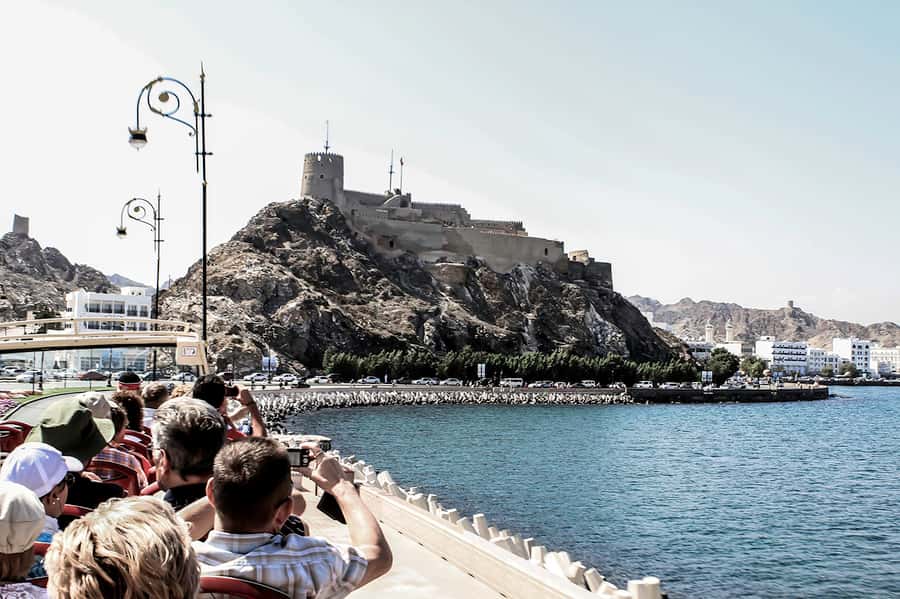
Muscat’s coastline is one of the strongest reasons to choose an open-top bus. From the upper deck, you can see the Sea of Oman and the sharp Hajar mountains rising behind the city. That combination gives the ride its best visual moments.
Marina Bandar Al Rowdha is one of the coastal stops. The marina gives the route a change of pace after the older forts, museums, and city streets. The listed sights also include a Mangrove Lagoon, adding another natural setting to the route.
The bus is at its most appealing when you are moving between these locations. You get a broad sense of Muscat’s scale, with mountains close enough to shape nearly every view and the sea opening out beside the road. The front upper deck has large windows and air-conditioning, while the open middle section is better for photographs. The rear section is most exposed, so I would avoid it during the strongest sun.
The audio commentary can help you notice what you are seeing, but do not expect every mountain, building, or shoreline view to receive a long explanation. One English-language recording was described as basic, with limited detail. That is a fair warning: use it as an introduction, then add depth at the museums or through your own reading.
One day or two days: choosing the better ticket
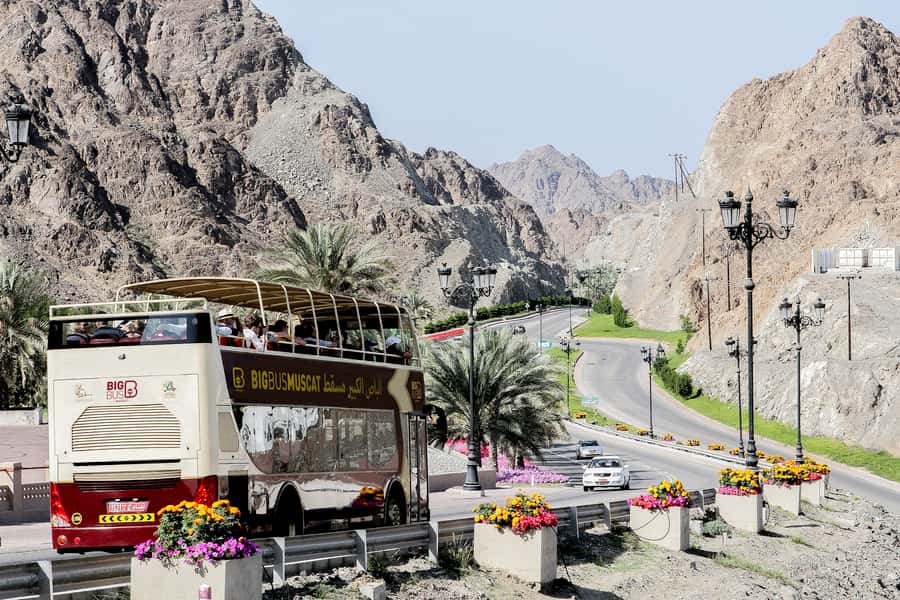
The ticket is valid for either one or two days, with unlimited rides per loop during operating hours. The right choice depends on how much you want to get off.
For a one-day visit, I would make the first loop without stopping, using the 1-hour-45-minute circuit to understand the route. Then I would choose two or three stops, probably Muttrah Souq, the forts and palace area, and one museum. This approach prevents you from wasting time waiting at an unfamiliar stop.
A two-day ticket gives the format more breathing room. You can complete the full circuit on the first day, then return to the stops that interested you most. You can spend longer at Muttrah, take your time around the palace and forts, and choose a museum without watching the clock.
The exact value depends on how many separate rides you would otherwise pay for. If your plan is simply to remain seated and see the city once, $85 feels expensive. If you use the ticket as transportation between several spread-out sights over two days, the price becomes easier to defend.
Children under five ride free, which can improve the value for families with very young children. Food, drinks, and attraction admission are not included, so plan for those costs separately.
Comfort, timing, and the practical details
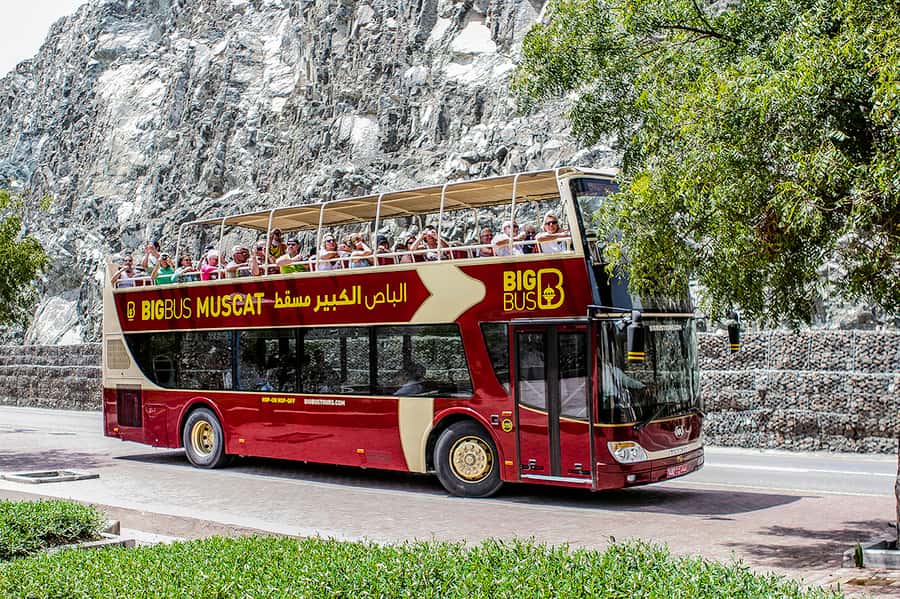
The bus includes headphones and digital commentary, with audio in English, Spanish, French, German, Italian, and Arabic. The driver speaks English. The commentary is useful for basic orientation, though it may feel thin if you want detailed historical explanation.
Seats are a real consideration. One English-language assessment found them uncomfortable, and the ride was considered boring after about an hour. I would treat that as good practical advice. Break up the circuit with a stop, especially if you have a two-day ticket.
The bus has a ramp and is wheelchair accessible. That is helpful, but the open upper deck and changing seating areas may still require you to choose your position carefully. If you have walking difficulties, the accessible ramp is a clear advantage, while the air-conditioned lower or front section may be more comfortable than the exposed upper rear.
Free cancellation is available up to 24 hours before the activity, and you can reserve while paying later. Those terms are useful if your Muscat schedule may change, though they do not alter the basic question of value.
Who will get the most from this Muscat tour?
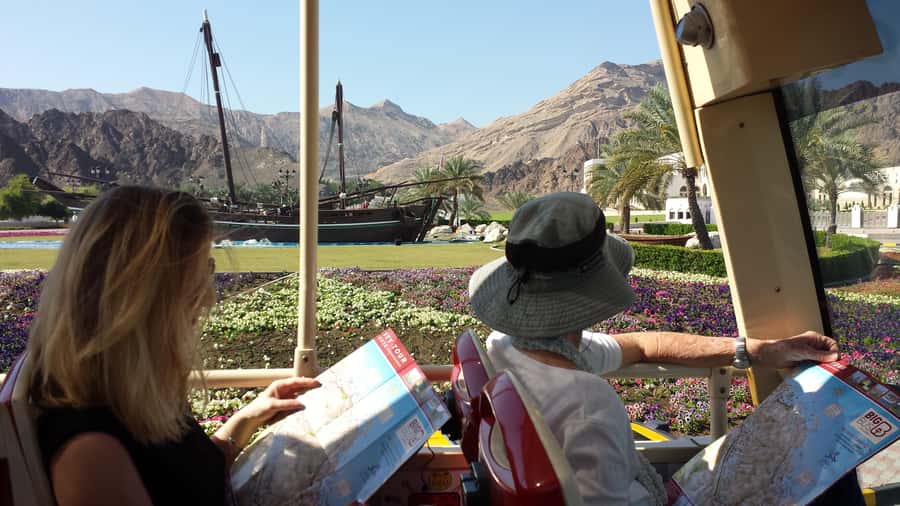
I would recommend it most strongly to first-time visitors who want an easy introduction to Muscat’s layout. It is also useful for anyone who prefers not to negotiate taxis, families who need a simple route, and cruise passengers or short-stay visitors who want to see several districts in one outing.
It suits you less if you want a small group with a live guide who can answer questions. The driver speaks English, but the sightseeing information comes through recorded audio. It also may disappoint you if you expect every stop to include entry or a long guided visit.
The tour works best when you treat it as a flexible transport-and-orientation service. Stay aboard for the big picture, then hop off where the city’s character is strongest. Muttrah, the forts, the palace, and at least one museum offer more substance than simply completing the loop.
Should you book the Big Bus Muscat tour?
Book it if you want a low-stress overview of a spread-out city and value the views of the mountains, coast, and major landmarks. The route is easy to understand, the app can help you track buses, and the two-day option gives you time to use the service as local sightseeing transport.
Think twice if $85 feels high for a basic recorded tour. The audio may be too general for history-minded visitors, and the seats and long circuit can test your patience. For the best experience, choose a cooler time of day, use the live tracking app, sit in the air-conditioned front section when the sun is strong, and plan several deliberate hop-offs instead of riding the full loop without a break.
FAQ
How long is the full Big Bus Muscat loop?
The full route takes 1 hour and 45 minutes if you stay on the bus and do not hop off.
How many stops are on the Muscat route?
The tour has eight stops near key landmarks and attractions.
Where can I board the bus?
The main boarding point is at the entrance to Muttrah Souq. You can also board at any stop along the route.
Which sights can I see on the tour?
The route includes Muttrah Souq, Muttrah Fort, Muttrah Corniche, the National Museum, Ruwi Clock Tower, the Parliament Building, Sohar Boat, Marina Bandar Al Rowdha, Al Alam Palace, Al Mirani Fort, Bait Al Zubair Museum, the Omani French Museum, Al Jalali Fort, and a Mangrove Lagoon.
How long is the ticket valid?
You can choose a ticket valid for one day or two days. It includes unlimited rides per loop during operating hours.
What languages are available for the audio guide?
Audio commentary is available in English, Spanish, French, German, Italian, and Arabic. The driver speaks English.
Is the bus wheelchair accessible?
Yes. All buses have a ramp for wheelchair users and people with walking disabilities.
Are attraction entrance fees included?
No. Entrance fees, food, and drinks are not included in the ticket price.
Just added in Muscat
- Wahiba Desert Safari Adventure , Swimm in Wadi Bani Khalid★ 4.5 · 2 reviews
- Wahiba Sands & Wadi Bani Khaled (Day Trip) -“Desert Safari”★ 5.0 · 1 review
- wadi shab and bimmah sinkhole tour from muscat★ 5.0 · 2 reviews
- Try scuba Diving Tours To Daymaniyat Islands.★ 5.0 · 12 reviews
- Wadi Bani Khalid – Wahiba Sands Desert – Sunset★ 4.0 · 1 review
- Wadi Shab &Bimmah Sinkhole &Heart shaped Cave &Pebble Beach★ 5.0 · 5 reviews
- Private 2-Day Guided Tour with Nizwa Friday Market Visit★ 5.0 · 2 reviews
- From Muscat Wadi Shab and Bimmah Sinkhole Tour★ 5.0 · 6 reviews
Muscat City Tours, compared.

Half-Day Sightseeing Essentials Tour and Audio Guide
Read our review →
Half-Day Private Muscat City Tour – Top Landmarks in Just 4 Hours
Read our review →
Private Muscat City Tour With Pick-up/ Drop-off
Read our review →
4 hours private Tour of Muscat City with Pick-up
Read our review →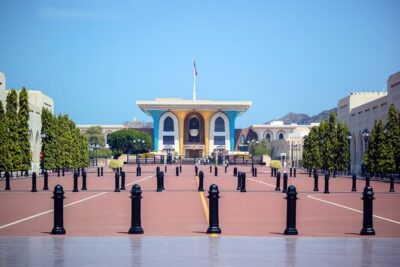
Browse the lists this tour appears in