
REVIEW · NIZWA AND OMANI FORTS
Full-Day Nizwa Fort, Bahla Fort and Jabreen Castle Private Tour
Oman’s past comes in stone, silver, and pottery. This private day trip from Muscat brings you to Nizwa Fort, the old capital’s market, Bahla’s famous fortress and pottery tradition, and the graceful rooms of Jabreen Castle. I especially like the private format, which gives you more room to ask questions and adjust your pace, and the comfortable 4WD vehicle with bottled water included. The main drawback is the long day: seven to eight hours on the road and at the sites, with lunch and entrance fees added to the advertised $187 price.
I also like that the route gives you three very different views of Omani history. Nizwa is about power and trade, Bahla is about fortifications and pottery, and Jabreen is about learning, domestic life, and royal ambition. The tour is praised for friendly guides such as Waleed, Ali, Amer, Said, Aziz, Ahmed, Khalid, and Saif, though your guide will depend on availability.
In This Review
- Key points to know before booking
- Why this Muscat day trip works
- Nizwa Fort and the power of the round tower
- Nizwa Souk, silver, khanjars, and dates
- Jabreen Castle and the quieter side of Omani history
- Bahla Fort, pottery, and a UNESCO-listed town
- The vehicle, guide, and pace of the day
- Is $187 per person good value?
- Who should book this experience?
- Should you book the Nizwa, Bahla, and Jabreen tour?
- FAQ
- How long is the tour from Muscat?
- Is pickup included?
- Is this a private tour?
- What type of vehicle is used?
- Is an English-speaking guide included?
- Are entrance fees included?
- Is lunch included?
- What happens if the weather is poor?
- What is the cancellation policy?
Key points to know before booking
- Nizwa Fort has a remarkable round tower: The main structure rises 24 meters, with an outer diameter of 43 meters and an inner diameter of 36 meters.
- The private 4WD matters on a full day: You have your own group, an English-speaking Omani guide, fuel, bottled water, and pickup and drop-off in the Muscat area.
- Jabreen offers a softer contrast to the forts: Its painted interiors, old utensils, and Ya’rubid-era rooms show how rulers lived, studied, and governed.
- Bahla adds local craft to the history: Along with its UNESCO World Heritage Site status, the town is known for pottery.
- The price is easier to justify for a small group: At $187 per person, the value improves when several people share the private vehicle and guide.
- Bring money for lunch and entry fees: Neither is included, so the final cost will be higher than the tour price.
Why this Muscat day trip works
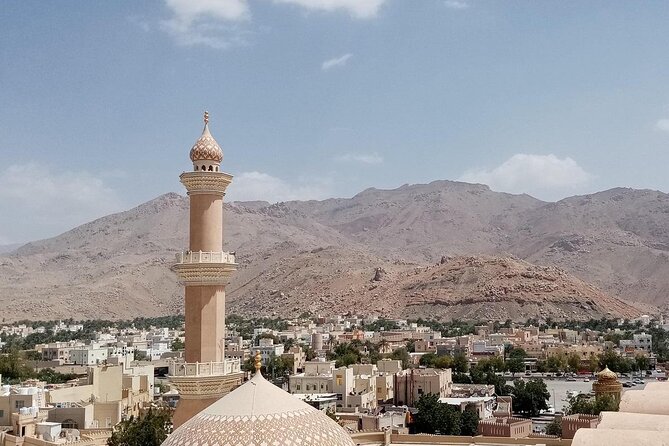
Nizwa lies inland from Muscat, in Oman’s Ad Dakhiliyah Governorate. The distance turns this into a proper day out, not a quick city excursion. You leave the capital behind and reach a part of Oman where forts, souks, craft workshops, and old towns still shape the visit.
I like the way the route mixes famous sights with everyday culture. A fort can tell you who held power, but the souk shows what people bought and sold. Pottery and silver reveal skills passed through local communities. Together, the stops give you more than a sequence of old buildings.
This is a private tour, so only your group participates. That makes a real difference when you want to spend longer in a fort, pause for photographs, or ask your guide to explain a detail again. Previous guests gave particularly warm praise to guides who were patient, flexible, friendly, and careful behind the wheel. Ali was singled out for adapting the day to personal interests, while Amer was praised for creating a relaxed outing and taking care of small details.
The tour runs about seven to eight hours. That is enough time to see the main sites, but it is still a full day. If you prefer a slow morning and long café breaks, this schedule may feel tight. If you want to cover several major sights from Muscat without arranging a car, it is a practical choice.
More forts and souqs in Muscat:
- From Muscat: Nizwa and Oman’s Historical Gems Tour
★ 4.7 · 403 reviews - From Muscat: Nizwa and Jebel Akhdar Tour with Lunch
★ 4.8 · 319 reviews - Nizwa Fort-Nizwa Souq-Misfah Al Arbyeen-Jebel Shams – Private Full Day Tour
★ 5.0 · 220 reviews
Nizwa Fort and the power of the round tower
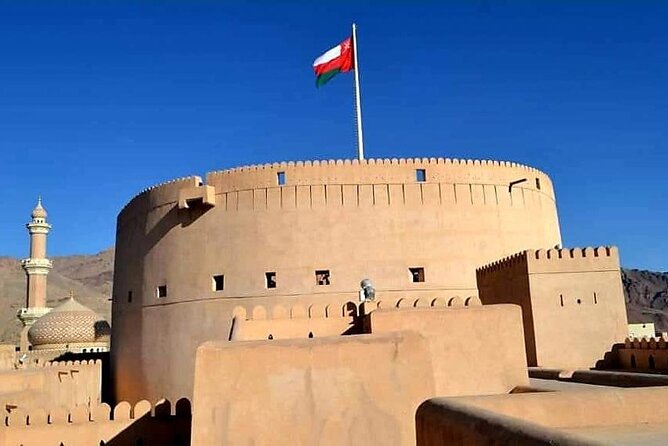
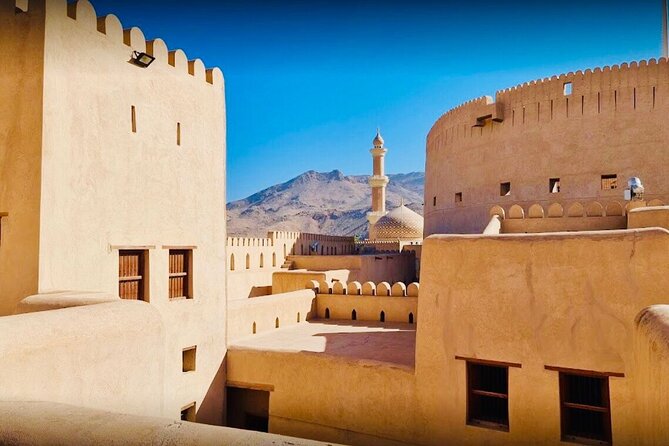
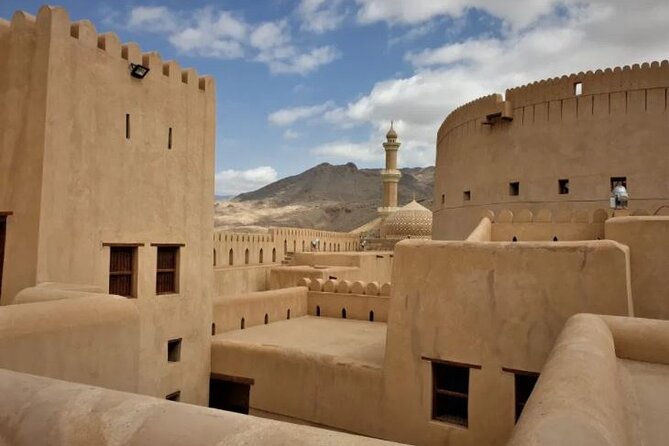
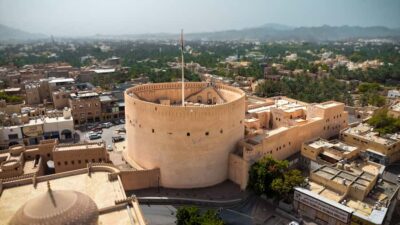
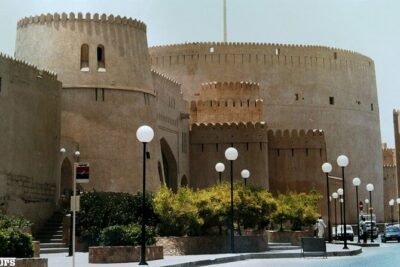
Nizwa Fort is the first major stop and the architectural centerpiece of the day. Imam Sultan Bin Saif Al Ya’ribi built it in the middle of the 17th century, when Nizwa was an important seat of Omani power.
The fort’s unusual shape is what makes it memorable. Its main tower is broad and round rather than a simple square block. At 24 meters high, it was built to dominate the town and provide a strong defensive position. The measurements help you understand its scale: the outer diameter is 43 meters, while the inner diameter is 36 meters.
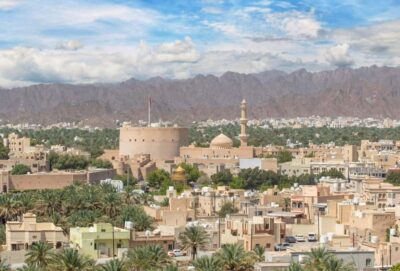
You are scheduled to spend about three hours here. That is a generous portion of the day, and it gives you time to take in the structure rather than rush through a few rooms. The round tower also offers wide views over Nizwa, making it one of the best places on the route to understand the town’s position.
Your English-speaking guide can help connect the building to Oman’s political past. The fort is not simply an attractive pile of stone. It was designed to protect authority, control access, and remind people below who held power. Ask questions as you go, since the private arrangement gives you a better chance to shape the explanation around your interests.
One practical point matters here: entrance fees are not included. The information supplied for the tour does not give a current admission price, so you should confirm the charge when booking or carry funds for the ticket. Wear sensible footwear, as exploring a large fort often means walking and climbing through uneven areas.
Three hours may feel long if you only want photographs. For anyone interested in Omani architecture and history, though, the time is useful. You can look closely at the unusual tower, enjoy the views, and avoid treating the fort as a quick stop between other attractions.
Nizwa Souk, silver, khanjars, and dates
After the fort, you spend about 30 minutes in Nizwa. The stop is short, but it adds an important human side to the day.
Nizwa is especially known for silver jewelry. Local craftsmen also make khanjars, the traditional curved daggers, along with copperware, coffee pots, swords, leather goods, and pottery. The khanjars are known for distinctive styles and patterns, while the silver work is widely regarded as among the best in Oman.
You might find this stop most rewarding if you look beyond souvenir shopping. Notice the materials, patterns, and practical objects that reflect Omani customs. Silver is not just decoration here, and a khanjar is not merely a display item. These crafts carry links to identity, ceremony, and local pride.
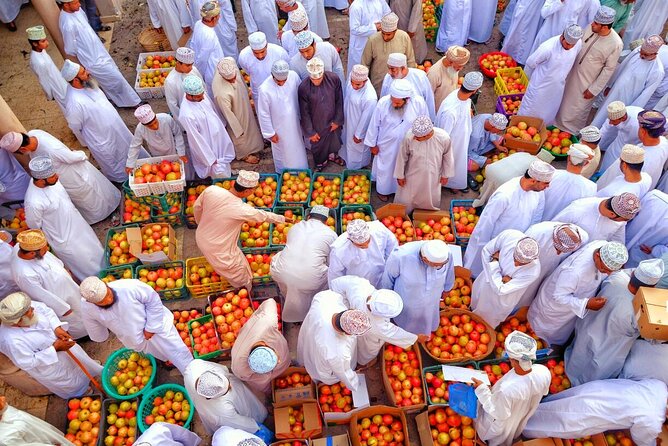
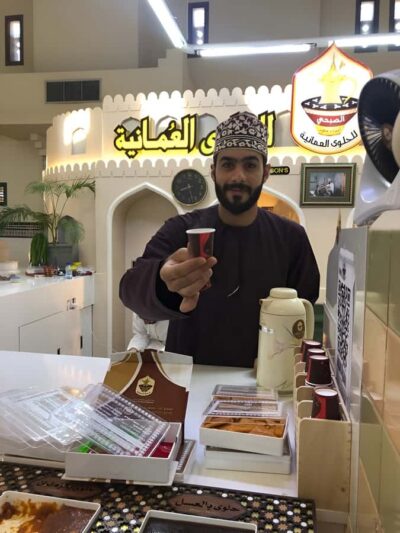
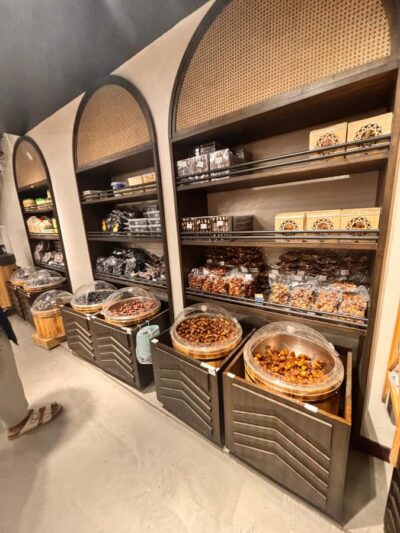
The souk is also a good place to sample dates. One account of the outing describes time to taste a dozen kinds, so you may find more variety than expected. That small detail can make the market feel less like a staged attraction and more like a place where food and trade still matter.
The stop is listed as free, but your purchases are not. You do not need to buy anything to enjoy the visit, though this is one part of the tour where you may want some local currency or a payment card. The 30-minute schedule gives you a taste of the market, not an extended shopping session.
If silver interests you, tell your guide early. The private format makes it easier to focus on craftsmanship instead of simply following a fixed group through the market.
Jabreen Castle and the quieter side of Omani history
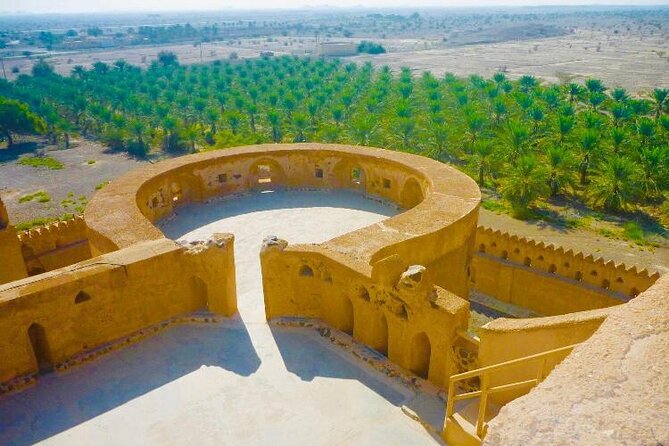
Jabreen, also spelled Jabrin or Jabreen, is known for its castle built under the Ya’rubid dynasty. Imam Bil’arab bin Sultan ruled from 1679 to 1692 and was buried at the site.
The castle is scheduled for about two hours, which is enough time to appreciate its rooms and decoration. This stop differs from Nizwa Fort in mood and purpose. Nizwa emphasizes defense and authority. Jabreen gives you a closer look at courtly life, learning, decoration, and household objects.
Inside, you can expect to see paintings and ancient utensils. These details matter because they bring the past down to a human scale. Instead of only asking how thick the walls were or where soldiers stood, you can think about the people who lived, worked, cooked, studied, and governed inside the building.
The castle was built during the same broad period of Omani dynastic history that shaped Nizwa, but it presents a different side of that world. I find that contrast one of the strongest reasons to choose this route. Two forts might blur together after a while. A defensive stronghold followed by a decorated castle keeps the day varied.
Several guides were praised for explaining Jabreen and Bahla in a way that helped connect the past to the present. Waleed, in particular, was described as patient and clear while discussing the two sites. That kind of explanation can make a major difference. Without context, painted walls and old objects can seem disconnected. With a good guide, you begin to understand why the building was made and how it fit into Oman’s political life.
As with Nizwa Fort, check the entrance arrangements before departure. The tour price does not include admissions, and the supplied details do not state the current ticket price.
More things to do in Muscat:
- Muscat: Daymaniat Islands Snorkeling Trip with Brunch
★ 4.7 · 2,317 reviews - From Muscat: Wadi Shab & Bimmah Sinkhole Full-Day Tour
★ 4.8 · 1,862 reviews - Muscat: Wahiba Desert and Wadi Bani Khalid Guided Group Tour
★ 4.8 · 820 reviews - Muscat: Half-Day Sightseeing Essentials Tour and Audio Guide
★ 4.2 · 598 reviews
Bahla Fort, pottery, and a UNESCO-listed town
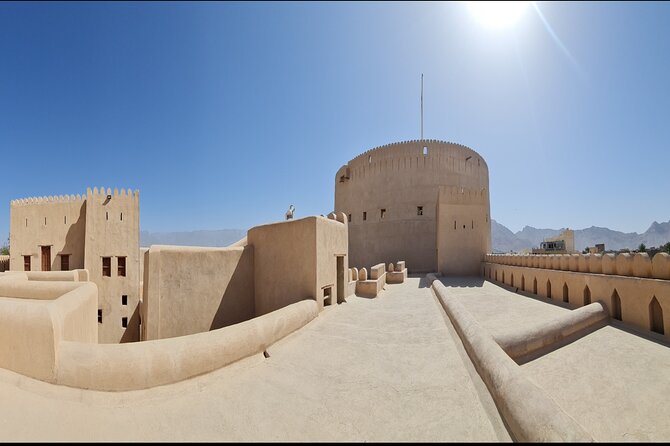
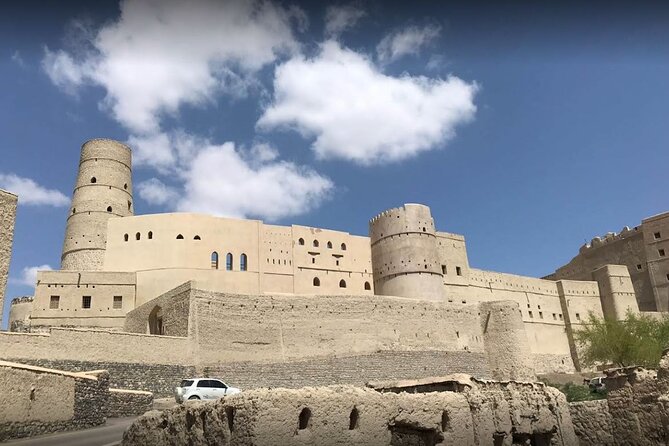
Bahla is about 40 kilometers from Nizwa and around 200 kilometers from Muscat. The town is a UNESCO World Heritage Site and is known for one of Oman’s oldest fortresses, Bahla Fort, which dates to the 13th century.
The age and scale of Bahla make it a fitting final major stop. Its long history also gives the guide plenty to explain, especially when comparing it with the later Nizwa Fort and Jabreen Castle. The route becomes a lesson in how defensive sites changed as political power shifted between towns and strongholds.
Bahla is not only about walls. The town is also known for pottery, and the tour highlights traditional pottery making. This is a valuable part of the day because it links old architecture with a living craft. You are not just looking at what Oman built centuries ago. You are also seeing a skill associated with the town today.
About two hours are set aside for Bahla. That allows time for the fort and the town, though you should keep your expectations realistic. This is a history-focused outing, not a full workshop or an extended craft class. The supplied details do not promise a hands-on pottery session, so consider the pottery visit an opportunity to observe local work.
The stop is also a good reminder that a UNESCO designation does not turn a town into a museum display. Bahla has its own identity, and the pottery tradition gives the visit a connection to daily life. I would listen closely to your guide here, since the value of the stop lies as much in the explanation as in the photographs.
Admission fees are not included, so budget for them. The day covers a lot, and the fort’s size can make the final stop feel physically demanding if the weather is hot. Bottled water is provided, but you should still dress for warm conditions and take breaks when needed.
The vehicle, guide, and pace of the day
A comfortable 4WD vehicle is included, with fuel and bottled water. A well-maintained Mitsubishi Pajero was specifically praised during one outing, and careful driving was also highlighted, including on challenging terrain during a different trip. For this route, reliable transport is more than a nice extra. You are spending most of the day moving between Muscat, Nizwa, Jabreen, and Bahla.
Pickup and drop-off are offered in the Muscat area. The exact pickup time is not provided, so confirm it when you book. Starting early may be useful if you want more breathing room, although the tour is advertised as seven to eight hours.
The guide is central to the experience. You receive an English-speaking Omani guide, and the strongest praise focuses on people who were friendly, professional, patient, and flexible. Guides named in individual accounts include Waleed, Ali, Amer, Said, Aziz, Ahmed, Khalid, Saif, Mohammed, and Khamis.
That list does not mean you can select a particular guide. It does show the style of service associated with the company: personal attention and substantial local explanation. One guide was described as making a first visit to Oman feel welcoming, while another was praised for sharing local knowledge beyond the basic site descriptions.
You should tell the guide what matters most to you. If you care about architecture, ask for more detail on the forts. If you prefer shopping, request extra attention at the souk. If you are curious about local crafts, ask about silver, khanjars, copperware, and pottery.
Is $187 per person good value?
The price is $187 per person. That is not a bargain day trip, especially since lunch and entrance fees are extra. Still, the cost includes private transport, an English-speaking Omani guide, fuel, bottled water, and pickup and drop-off in the Muscat area.
The value depends heavily on group size. For one person, the price feels high once admissions and lunch are added. For a family or small group, the private vehicle and guide become more reasonable because you are sharing the main cost while keeping the schedule to yourselves.
You are also paying for convenience. Renting a car, navigating to three historic sites, arranging fuel, and building a workable route from Muscat takes time. Driving yourself may cost less, but it places all the planning and navigation on you. This tour makes more sense if you prefer to focus on the sites and let an experienced local driver handle the road.
The guide adds the most value when the explanations are detailed and adapted to your questions. A basic transfer would not justify the price. A full day of historical context, local craft insight, and flexible pacing can.
Who should book this experience?
I would recommend this tour to anyone staying in Muscat who wants a strong introduction to Oman’s inland history in a single day. It suits first-time visitors especially well because the route combines major landmarks, local trade, craft traditions, and an English-speaking guide.
It is also a good match for families and small groups. A private tour is easier to manage than a large shared coach, and you can ask for pauses or adjust the pace within the available time.
History fans will get the most from the three different buildings. Photographers will appreciate the round form of Nizwa Fort, the views from its tower, the old walls of Bahla, and Jabreen’s painted interiors. Shoppers may prefer a different tour if they want several hours in markets, since the Nizwa souk stop is only about 30 minutes.
This is less suitable if you want a relaxed resort day, a long lunch, or only one main attraction. The schedule is full, and the drive from Muscat makes the outing physically demanding in hot weather.
Cancellation is free up to 24 hours before the start time for a full refund. Changes or cancellations within 24 hours are not accepted for a refund. The experience requires good weather, and poor conditions may lead to a new date or a full refund.
Should you book the Nizwa, Bahla, and Jabreen tour?
Book it if you want three distinct historic sites, a private guide, and a straightforward day trip from Muscat. The strongest reasons are the unusual round tower at Nizwa, the decorated rooms of Jabreen, and Bahla’s combination of fortress and pottery tradition.
I would book with two expectations: budget extra for lunch and admissions, and prepare for a long day. If you are traveling with family or friends, the $187 price becomes easier to defend. If you are alone and comfortable driving in Oman, compare the cost with a self-guided outing.
For the best experience, ask at the start for the balance you prefer between history, shopping, photographs, and craft. With a flexible guide such as those praised for patience and personal care, that small conversation can turn a packed sightseeing day into a well-shaped introduction to Oman.
FAQ
How long is the tour from Muscat?
The tour lasts approximately seven to eight hours.
Is pickup included?
Yes. Pickup and drop-off are offered in the Muscat area.
Is this a private tour?
Yes. Only your group participates in the activity.
What type of vehicle is used?
The tour includes a comfortable 4WD vehicle. A Mitsubishi Pajero was specifically noted as being well maintained during one outing.
Is an English-speaking guide included?
Yes. An Omani English-speaking guide is included.
Are entrance fees included?
No. Entrance fees are not included in the tour price.
Is lunch included?
No. Lunch is not included, so you should budget for it separately.
What happens if the weather is poor?
The experience requires good weather. If it is canceled because of poor conditions, you will be offered another date or a full refund.
What is the cancellation policy?
You can cancel at least 24 hours before the experience starts for a full refund. Cancellations or changes made less than 24 hours before the start time are not refunded or accepted.
Just added in Muscat
- Wahiba Desert Safari Adventure , Swimm in Wadi Bani Khalid★ 4.5 · 2 reviews
- Wahiba Sands & Wadi Bani Khaled (Day Trip) -“Desert Safari”★ 5.0 · 1 review
- wadi shab and bimmah sinkhole tour from muscat★ 5.0 · 2 reviews
- Try scuba Diving Tours To Daymaniyat Islands.★ 5.0 · 12 reviews
- Wadi Bani Khalid – Wahiba Sands Desert – Sunset★ 4.0 · 1 review
- Wadi Shab &Bimmah Sinkhole &Heart shaped Cave &Pebble Beach★ 5.0 · 5 reviews
- Private 2-Day Guided Tour with Nizwa Friday Market Visit★ 5.0 · 2 reviews
- From Muscat Wadi Shab and Bimmah Sinkhole Tour★ 5.0 · 6 reviews
Nizwa and Omani Forts, compared.
Nizwa Fort-Nizwa Souq-Misfah Al Arbyeen-Jebel Shams – Private Full Day Tour
Read our review →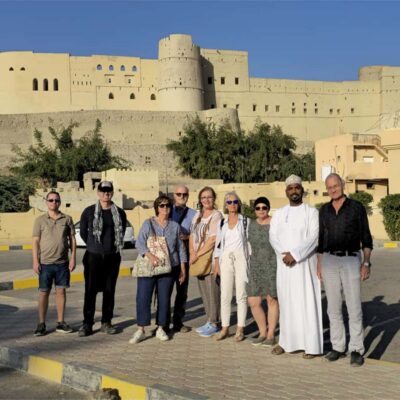
Nizwa Heritage & Culture Full Day Tour with Audio Guiding
Read our review →
Browse the lists this tour appears in