
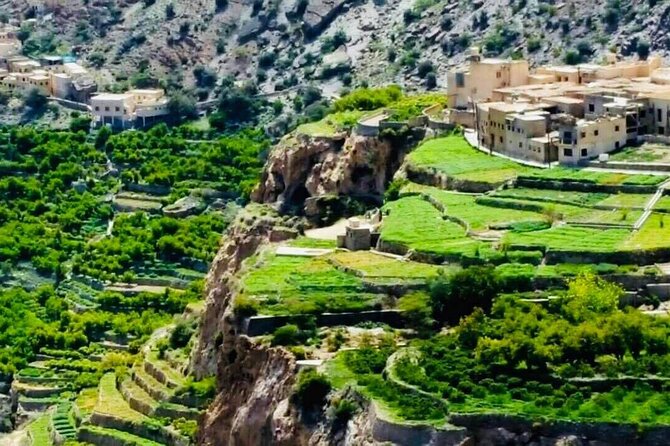
REVIEW · MUSCAT CITY TOURS
4-Days Private Jamila Sightseeing Tour
Oman packs a lot into four days. This private circuit from Muscat takes you from the turquoise pools of Wadi Shab to the sands of Wahiba, then up into the Hajar Mountains and the old towns around Nizwa. You travel in a comfortable four-wheel-drive vehicle with an English-speaking Omani guide, and pickup is available from your hotel, port, or airport in the Muscat area.
I like the broad range of scenery, from sea turtles and coastal wadis to desert sunsets and high mountain villages. I also like the practical design: three nights of accommodation, breakfast, dinner, bottled water, several entry fees, and private transport are included. The main consideration is the pace. This is a busy route with long road sections, early starts, walks, swimming, and several sightseeing stops packed into each day.
The strongest praise has gone to the guides. Ahmed was described as friendly and entertaining, while Said, Hamood, and Mohammed were praised for their kindness, humor, local knowledge, and care with guests. Since this is a private tour, your guide can usually explain Oman in a more personal way than a large coach tour, though the exact guide depends on availability.
In This Review
- Key points before you book
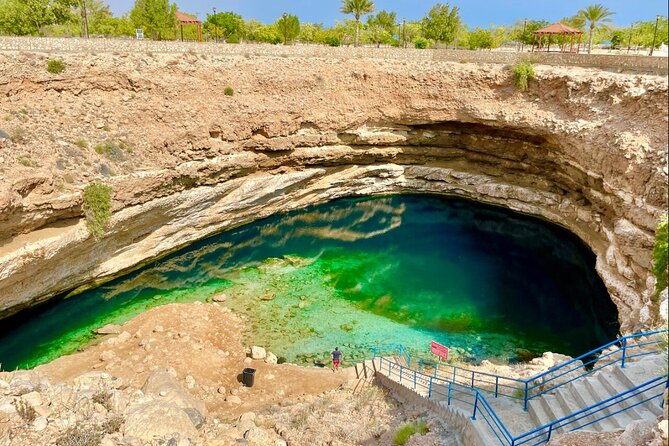
- Day 1: Bimmah Sinkhole, Wadi Shab, and turtle country
- Wadi Shab is the physical centerpiece
- A greener side of Oman at Wadi Tiwi
- Turtle watching at Ras Al Jinz
- Day 2: Sur, traditional boats, emerald pools, and Wahiba Sands
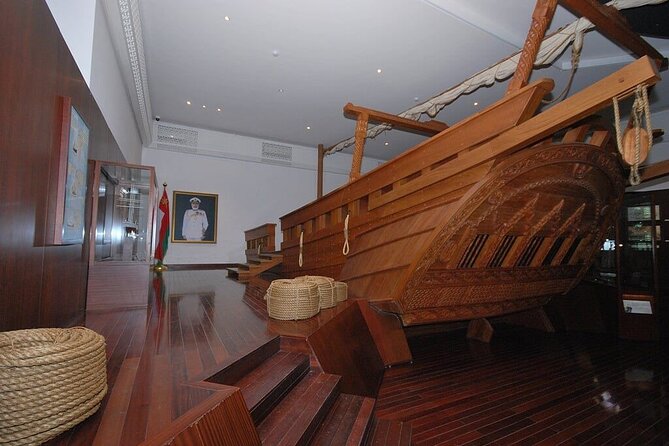
- Sur’s dhow factory keeps an old craft alive
- A brief stop at the ghazal farm
- Wadi Bani Khalid gives you time to slow down
- Sunset in Wahiba Sands
- Day 3: A desert sunrise and the high Hajar Mountains
- Zukait’s Bronze Age beehive tombs
- Jebel Akhdar, Oman’s Green Mountain
- Birkat Al Mouz and Oman’s irrigation traditions
- Overnight around Nizwa
- Day 4: Nizwa Fort, Al Hamra, Misfah, and Jebel Shams
- Nizwa Souq is the best shopping stop
- Old Al Hamra and the mountain village of Misfah
- Jebel Shams closes the circuit
- What the $1,400 price includes
- Who will enjoy this tour most?
- Should you book the 4-Day Private Jamila Sightseeing Tour?
- FAQ
- Where does the tour begin?
- How long is the experience?
- Is this a private tour?
- What type of vehicle is used?
- Is a guide included?
- Are hotel transfers included?
- Which entry fees are included?
- Are meals included?
- What room arrangements are offered?
- Can I cancel for a full refund?
Key points before you book
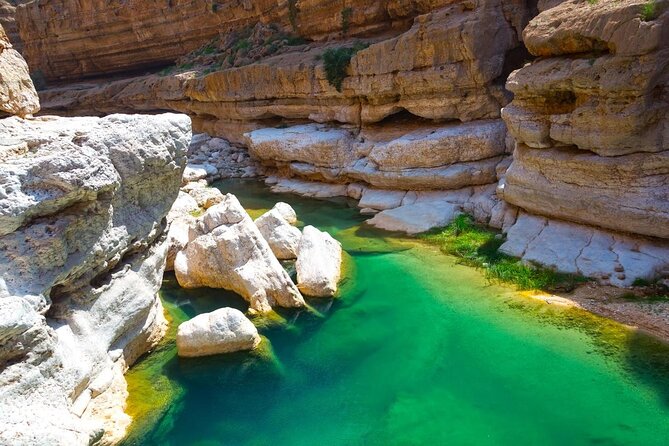
- Wadi Shab requires a real walk and swimming: Allow four hours for the canyon, pools, boat crossing, and water route into the cave.
- The desert night is a major highlight: Wahiba Sands brings dune driving, sunset, dinner, a campfire, and an early sunrise.
- You see Oman’s three big settings: Coast, desert, and mountains all appear in one tightly planned circuit.
- Private transport keeps the trip flexible: Your group travels together in a four-wheel-drive vehicle rather than on a large shared coach.
- Meals are only partly covered: Three breakfasts and three dinners are included, but lunch is not.
- The price reflects privacy and coverage: At $1,400 per person, the value depends on how much you appreciate a private guide, included rooms, transport, and a full route.
Day 1: Bimmah Sinkhole, Wadi Shab, and turtle country
The first day begins at 8:30 a.m. with pickup in the Muscat area. Bimmah Sinkhole is a quick stop on the way south, mainly for photographs. You have about an hour here, and admission is included at no extra cost.
The sinkhole is a useful first taste of Oman’s unusual geology, but keep expectations realistic. This is a short visit rather than a full activity, and the day’s main event is still ahead. Bring your camera, then be ready to move on.
More Muscat city tours:
- Muscat: Half-Day Sightseeing Essentials Tour and Audio Guide
★ 4.2 · 598 reviews - Muscat: Budget Friendly City Tour
★ 4.8 · 321 reviews - Half-Day Private Muscat City Tour – Top Landmarks in Just 4 Hours
★ 5.0 · 256 reviews
Wadi Shab is the physical centerpiece
Wadi Shab receives about four hours, which is appropriate because this is not simply a roadside viewpoint. You first cross by boat, with the boat fee included, then walk for roughly 35 minutes through a canyon lined with palms and steep rock walls.
The route leads to clear pools where you can swim from one pool to the next. At the final pool, an opening in the rocks allows you to swim into a narrow cave with a small waterfall. Sunlight reaches the water through the rock, giving the cave its memorable color.
You should treat this stop as an active outing. Wear secure footwear for the walk and bring suitable swimwear if you want to enter the pools. The supplied details do not specify changing facilities or equipment, so keep your day bag simple and ask your guide what is practical before setting out.
The four-hour time slot may feel generous to some people and rushed to others. Your pace, swimming ability, water conditions, and time spent taking photographs will affect the experience. If you dislike uneven walks or swimming through confined spaces, Wadi Shab may be the toughest part of the tour.
A greener side of Oman at Wadi Tiwi
Wadi Tiwi receives 45 minutes as a photo stop. Its palm plantations give it a greener appearance than many of Oman’s rocky valleys, and the name comes from the nearby coastal village of Tiwi.
This is a good contrast with Wadi Shab. Instead of a long walk and swim, you get a short pause to look at cultivated land and canyon scenery. The brief timing also helps keep the day moving toward the turtle reserve.
Turtle watching at Ras Al Jinz
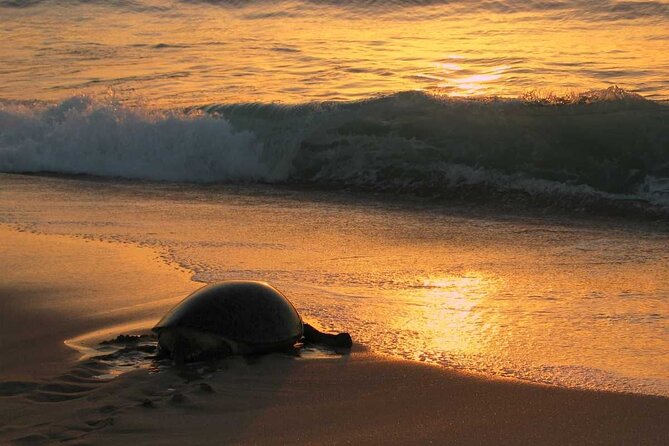
The evening visit to Ras Al Jinz Turtle Reserve lasts about two hours, with entry included. The nearby beaches at Ras Al Hadd and Ras Al Jinz are known for green sea turtles, and the experience is built around watching them at night.
Turtle watching is one of the tour’s more distinctive features because it adds wildlife to a route otherwise focused on scenery, architecture, and outdoor activity. It is also an evening commitment, so Day 1 becomes a long day after the Wadi Shab walk.
Your overnight stay is connected with the turtle visit, but the supplied details do not name the accommodation. Three nights are included in total, with room arrangements based on party size: a standard double room for two people, a double room with an extra bed for three, or two standard double rooms for four.
More things to do in Muscat:
- Muscat: Daymaniat Islands Snorkeling Trip with Brunch
★ 4.7 · 2,317 reviews - From Muscat: Wadi Shab & Bimmah Sinkhole Full-Day Tour
★ 4.8 · 1,862 reviews - Muscat: Wahiba Desert and Wadi Bani Khalid Guided Group Tour
★ 4.8 · 820 reviews - Muscat: Wadi Bani Khalid Oasis & Oman Desert Tour
★ 4.8 · 434 reviews
Day 2: Sur, traditional boats, emerald pools, and Wahiba Sands
Day 2 begins around Sur, a port city on Oman’s eastern coast. The city has old fortifications and a strong connection to seafaring. Sunaysilah Fort, with four defensive towers around a courtyard, is noted as part of the city’s historic character, although the listed visit focuses on the dhow factory.
Sur’s dhow factory keeps an old craft alive
At the dhow factory, you spend about 45 minutes seeing traditional wooden boats being built. The entry fee is included.
This is a worthwhile stop because it connects Oman’s coastal setting with practical local craftsmanship. Dhows were central to the country’s maritime activity, and seeing construction by hand gives you something more tangible than a quick photograph of a fort.
The visit is short, so do not expect a long workshop session. Think of it as a focused introduction to boatbuilding within a wider sightseeing day.
A brief stop at the ghazal farm
The route then continues to Al Kamil Wal Wafi and the Omani Ghazal Farm, also called Asilel Farm. You have about 30 minutes to see ghazal, or Arabian gazelles.
This is a small stop, but it breaks up the drive and adds a look at local animal life. Because the visit is brief, it works best as an added point of interest rather than a reason to book the entire tour.
Wadi Bani Khalid gives you time to slow down
Wadi Bani Khalid receives two hours. It is one of Oman’s best-known wadis, with large emerald pools reached by a short walk. You can swim, sunbathe, relax, or have a picnic among the canyon scenery.
After the more demanding route at Wadi Shab, this stop offers a gentler way to enjoy water and rock. The tour does not include lunch, so this is one of the places where you will need to handle your midday meal yourself. Bottled water is included throughout the tour, but bring or buy anything else you want to eat.
Two hours gives you time to swim or sit by the pools, but it is not a full day at the wadi. If you prefer a slow, unhurried schedule, you may wish the itinerary allowed more time here.
Sunset in Wahiba Sands
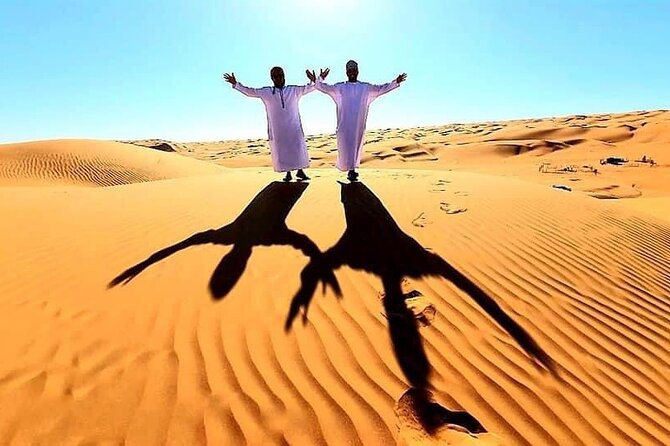
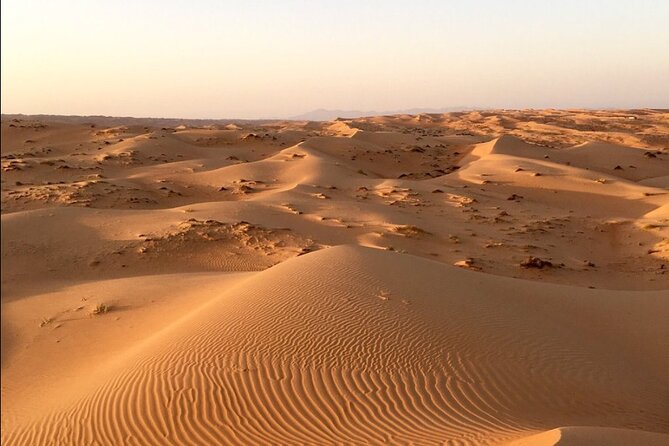
The day ends at a desert camp in Wahiba Sands. You can relax, take part in a four-wheel-drive ride over the dunes, and watch sunset from a high dune. Dinner and time around a campfire are included.
This is one of the tour’s strongest sections. The desert visit is not just a drive-through stop. It includes the transition from afternoon light to sunset, an evening meal, and an overnight camp setting. Some tour experiences also include camel riding, and the supplied feedback specifically praised camel rides and dune driving, but you should confirm exactly what is included in your booking before counting on either activity.
The 4WD vehicle matters here. It is suited to the desert route and also gives you more comfort on the longer road sections than a basic car would. Still, dune driving can be bumpy, and anyone prone to motion sickness should prepare accordingly.
Day 3: A desert sunrise and the high Hajar Mountains
You begin Day 3 early to watch sunrise from the Wahiba dunes before breakfast. The scheduled sunrise stop lasts about 30 minutes.
This is a short but smart addition. Sunset and sunrise show the desert in very different light, and the early start lets you see the dunes before the day grows hot. It also means you should be ready for a morning wake-up rather than a leisurely camp breakfast.
Zukait’s Bronze Age beehive tombs
The next major stop is the Zukait Tower Tombs near Izki, with about an hour set aside. These beehive-shaped tombs date to the Bronze Age and form part of an archaeological setting recognized by UNESCO in 1988.
The appeal here is quiet and historical rather than theatrical. You see old stone structures in their original setting, with the mountain country around them. The site helps show that Oman’s story reaches far beyond forts and souqs from more recent centuries.
The wording supplied for this site describes it as a well-preserved Bronze Age area, but the tour details do not list an admission fee. The visit is therefore presented as a free stop.
Jebel Akhdar, Oman’s Green Mountain
Jebel Akhdar means Green Mountain and forms part of the Hajar range. The high point reaches about 2,980 meters, while the Saiq Plateau sits around 2,000 meters above sea level.
You have two hours here. That is enough to enjoy views and learn about the mountain region, but not enough for an extended mountain excursion. The change in temperature and scenery is the point: after the warm coast and desert, the high country feels like a different Oman.
The route description does not specify a particular village, viewpoint, or walk on Jebel Akhdar. Ask your guide what the day’s exact mountain stop will be, especially if you have a particular interest in views or village life.
Birkat Al Mouz and Oman’s irrigation traditions
Birkat Al Mouz is a village on the old Muscat to Nizwa road. Its name translates as Banana Pool, a reference to the banana plantations in the area. The stop lasts about 30 minutes.
You then spend another 30 minutes learning about Oman’s aflaj irrigation systems. Five of these systems were added to the UNESCO World Heritage list. The value of this stop is practical: it shows how water has supported farming and settlement in a country where it is never something to take for granted.
The two short visits work well together. Birkat Al Mouz shows the village setting, while the aflaj stop explains the water system that made cultivation possible.
Overnight around Nizwa
The day moves toward Nizwa, an old city in the Ad Dakhiliyah region. It sits among seasonal waterways and palm plantations and serves as a natural base for the following day’s fort, souq, and mountain villages.
Because the accommodation name is not provided, confirm the exact overnight location and room setup before booking. The package does include three nights, breakfast, and dinner, but the listed schedule does not identify each hotel or camp by name.
Day 4: Nizwa Fort, Al Hamra, Misfah, and Jebel Shams
The final day begins with Nizwa Fort, a seventeenth-century castle and one of Oman’s best-known examples of traditional architecture. You have 45 minutes, with entry included.
The fort helps put the earlier desert and mountain scenery into cultural context. Its design shows how defensive buildings also served as centers of local life. Forty-five minutes is enough for a focused visit, but the stop will feel brief if you want to study every room or read every display.
Nizwa Souq is the best shopping stop
Nizwa Souq receives one hour. The market includes separate sections for fruit and vegetables, meat, and fish, along with Omani silver crafts and other handmade goods.
This is where you have the clearest chance to buy something connected to Oman rather than a generic souvenir. Silverwork is a key shopping interest, but take your time comparing pieces and ask about prices before committing. The tour includes no shopping credit, and lunch is also not included, so this is a useful point to plan both purchases and food.
Old Al Hamra and the mountain village of Misfah
Al Hamra is described as a 400-year-old town built near an abandoned settlement estimated at 700 to 1,000 years old. You have 45 minutes to see the area.
The old ruins give you a sense of how Omani villages changed over time. Since the older section is described as untouched, you should expect an atmospheric walk and photographs rather than a polished museum visit.
Misfah Al Abriyeen is next, with another 45 minutes. The mountain village sits about 1,000 meters above sea level and takes its name from the Al Abri tribe. Its position on the mountain foothills makes it a natural companion to the Al Hamra stop.
The time here is short, so focus on the village setting and the contrast between cultivated terraces, stone homes, and steep mountain terrain. This is not a full hiking visit.
Jebel Shams closes the circuit
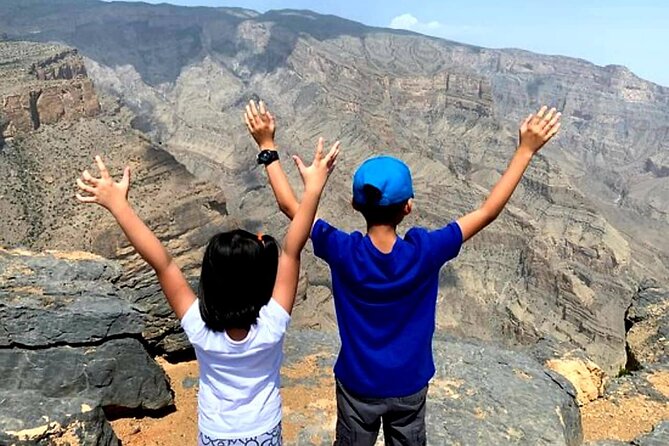
Jebel Shams is the highest mountain in the Hajar range and the highest peak in Oman. The final stop lasts about an hour and is designed around mountain views.
After four days of wadis, coast, desert, old towns, and irrigation systems, Jebel Shams provides a fitting final scene. The schedule does not specify a particular trail or canyon viewpoint, so clarify the planned stopping point if you want a certain view.
What the $1,400 price includes
At $1,400 per person, this is not a budget tour. Its value comes from the amount packed into the price: private four-wheel-drive transport, an English-speaking Omani guide, Muscat-area pickup and drop-off, three nights of accommodation, three breakfasts, three dinners, bottled water, and entry fees for turtle watching, the dhow factory, the Wadi Shab boat, and Nizwa Fort.
For a couple or small group that wants a private route without arranging hotels, desert transport, and transfers separately, the package can make practical sense. Group discounts are available, which may improve the per-person value for larger private parties.
You still need to budget for lunch, personal purchases, and any activity not expressly included. Camel rides and some desert extras are praised in the feedback, but they should be confirmed rather than assumed.
Who will enjoy this tour most?
I would recommend this route to you if you want a broad first look at Oman and prefer having a local guide handle the driving and timing. It suits active adults, couples, families able to manage long days, and small groups that want privacy.
You should be comfortable with a 35-minute walk at Wadi Shab, swimming if you choose to enter the pools, early desert mornings, and repeated transfers between regions. The itinerary is not designed for slow travel. It gives you many memorable stops, but several are limited to 30 or 45 minutes.
The tour has a perfect five-star rating from 10 supplied reviews, with especially warm praise for guides named Ahmed, Said, Hamood, and Mohammed. The repeated themes are friendliness, humor, helpfulness, water offered during the drive, and strong explanations of Oman’s culture and scenery. That personal service is probably the biggest reason to choose a private operator rather than build this route alone.
Pickup and drop-off are offered from a Muscat hotel, port, or airport. Confirmation is provided at booking, and the activity is private to your group. Most people can participate, and service animals are allowed. Cancellation is fully refundable up to six full days before the start, with reduced refunds inside that window. Poor weather or failure to meet the minimum number of participants can lead to a new date or a full refund.
Should you book the 4-Day Private Jamila Sightseeing Tour?
Book it if you want Oman’s greatest variety in one organized trip: coastal water, wadis, turtles, wooden boats, desert dunes, Bronze Age tombs, forts, souqs, and high mountain villages.
Think twice if you want long stays at each place, a clearly named hotel list, or included lunches. Before paying, ask for the exact accommodation, the guide assigned to your group, the planned Jebel Shams viewpoint, and whether camel riding or dune driving is included or optional.
For a first visit, I like the route. It is busy, but it connects Oman’s natural and cultural highlights better than a city-only tour. The private format, meals, transport, and guide support make the high price easier to justify for a small group that values comfort and simplicity.
FAQ
Where does the tour begin?
The tour starts at 8:30 a.m. Pickup is offered from a hotel, port, or airport in the Muscat area.
How long is the experience?
The tour lasts approximately four days and includes three nights of accommodation.
Is this a private tour?
Yes. Only your group participates in the private activity.
What type of vehicle is used?
Transport is provided in a comfortable four-wheel-drive vehicle.
Is a guide included?
Yes. An English-speaking Omani tour guide is included.
Are hotel transfers included?
Yes. Pickup and drop-off from the hotel, port, or airport in the Muscat area are included.
Which entry fees are included?
Turtle watching, the dhow factory, the Wadi Shab boat, and Nizwa Fort entry fees are included.
Are meals included?
Three dinners and three breakfasts are included. Lunch is not included.
What room arrangements are offered?
Two people receive a standard double room. Three people receive a standard double room with an extra bed. Four people receive two standard double rooms.
Can I cancel for a full refund?
Yes, if you cancel at least six full days before the experience start time. Shorter cancellation periods have reduced or no refunds, depending on how close they are to departure.
Just added in Muscat
- Wahiba Desert Safari Adventure , Swimm in Wadi Bani Khalid★ 4.5 · 2 reviews
- Wahiba Sands & Wadi Bani Khaled (Day Trip) -“Desert Safari”★ 5.0 · 1 review
- wadi shab and bimmah sinkhole tour from muscat★ 5.0 · 2 reviews
- Try scuba Diving Tours To Daymaniyat Islands.★ 5.0 · 12 reviews
- Wadi Bani Khalid – Wahiba Sands Desert – Sunset★ 4.0 · 1 review
- Wadi Shab &Bimmah Sinkhole &Heart shaped Cave &Pebble Beach★ 5.0 · 5 reviews
- Private 2-Day Guided Tour with Nizwa Friday Market Visit★ 5.0 · 2 reviews
- From Muscat Wadi Shab and Bimmah Sinkhole Tour★ 5.0 · 6 reviews
Muscat City Tours, compared.

Half-Day Sightseeing Essentials Tour and Audio Guide
Read our review →
Half-Day Private Muscat City Tour – Top Landmarks in Just 4 Hours
Read our review →
Private Muscat City Tour With Pick-up/ Drop-off
Read our review →


4 hours private Tour of Muscat City with Pick-up
Read our review →
Browse the lists this tour appears in